Oriental Rug Fringe: Why It Yellows and How to Care for It
The fringe is the first part of an Oriental rug to look old. It turns yellow, brown or gray, it tangles, and sometimes it starts to break. Here is what is really going on, what you can do at home, and what a professional cleaning can and cannot fix.
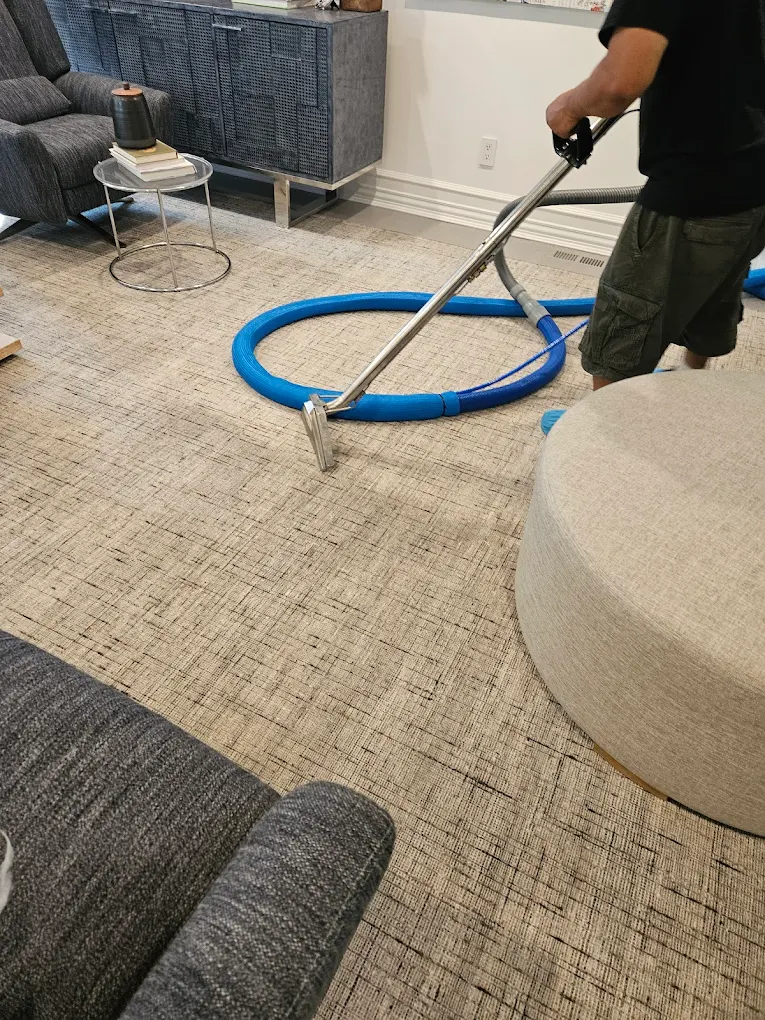
On a hand-knotted Oriental rug, the fringe is the end of the cotton threads that run through the whole rug, so it soaks up whatever the rug soaks up. It usually yellows from soil, spills and pet accidents, and it turns tan or brown when it stays wet too long and dries slowly. Bleach, scrubbing and cutting do lasting harm. A careful professional cleaning washes, rinses and grooms the fringe with the rug, and most yellowed fringes come back much brighter, though not always pure white.
A rug that looks clean in the middle but tired at the ends is a common reason people call us about Oriental rug cleaning on Long Island.
We are a Baldwin company, and our crews work in homes across Nassau and Suffolk. Most people know us as rug and carpet cleaners on Long Island, and we check the fringe on every rug before we start.
What the fringe really is
On a true hand-knotted rug, the fringe is not a trim that someone sewed on. It is the end of the warp, the long threads that run the length of the rug. Every knot of the pile is tied around those threads, and the leftover ends are your fringe.
So the fringe is part of the rug’s structure, and damage to it can loosen the last rows of knots. The warp is usually cotton while the pile is wool, and the two react differently to water and time. That is why the fringe can look so different from the rest of the rug.
On many machine-made and tufted rugs, the fringe is a strip sewn or glued on. If you are not sure which kind you have, our guide on how to tell a hand-knotted rug from a machine-made one walks you through the back of the rug.
Why fringe turns yellow, brown or gray
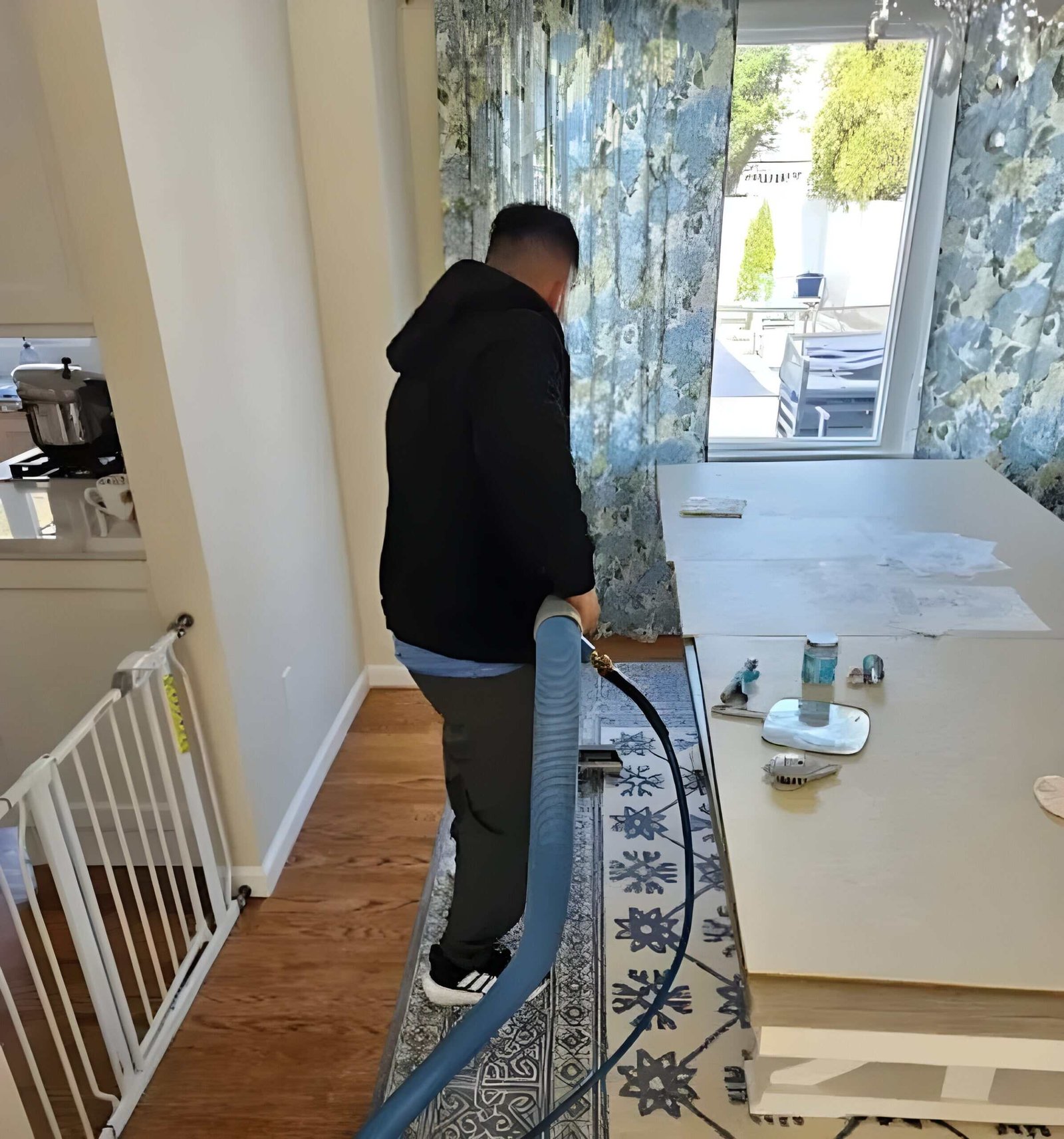
Fringe sits at the edge, where feet, vacuums, pets and sun reach it first. Most rugs have more than one of these going on.
Everyday soil. Cotton holds on to dirt, and the fringe gets walked on at doorways and stepped over when people come into the room. Over years it turns white fringe gray or yellow.
Too much water, dried too slowly. Cotton that stays wet for a long time can turn tan or brown as it dries, for example after a home cleaning machine or on a damp basement floor.
Pet accidents. Pets often pick the edge of a rug, and urine leaves a yellow stain and a smell. If that sounds familiar, read what to do when a pet has an accident on a rug before you treat it.
Sun. The end of a rug by a slider or big window gets strong light every afternoon, which can give cotton a yellow cast.
Dye from the rug. Sometimes the color in the fringe is not dirt at all. If the rug was soaked, dye from the wool can bleed into the cotton and leave a pink, blue or brown tint.
Long Island houses and fringe
Here is what our crews see most often on fringe in Nassau and Suffolk houses.
- Entry and mudroom rugs: road salt and slush in winter, and wet leaves in the fall, get dragged right across the fringe at the door.
- Beach sand: in South Shore homes near the bays and the ocean, fine sand works into the fringe knots and grinds the cotton.
- Finished basements: rugs on concrete floors can pick up moisture, which is a common cause of brown fringe.
- Sliders to the yard: the end of the rug by the door takes sun and wet paws every day.
If one end looks much worse than the other, look at where that end sits.
Is it dirt, a stain or damage?
Look closely first. The fix depends on what you see.
| What you see | Most likely cause | What usually helps |
|---|---|---|
| Even gray or dull yellow | Soil built up over time | A full professional wash and rinse |
| Tan or brown, darker at the tips | Cotton stayed wet and dried slowly | Careful professional treatment; may lighten, not always vanish |
| Yellow patch with a smell | Pet urine | Pet treatment and a full wash of the rug |
| Pink, blue or brown tint | Dye moved from the rug | Leave it alone and ask a pro before any wet cleaning |
| Short, broken or missing strands | Wear, vacuum damage or dry rot | Cleaning cannot fix it; the ends need to be secured |
A simple test: gently bend a few strands. If they snap instead of bending, the cotton is weak and needs extra care.
Home habits that ruin fringe
Bleach or whitener
It may look white for a week, but bleach weakens cotton and can strip color from the wool right next to the fringe.
Scrubbing with a brush
Hard scrubbing frays the strands and pulls on the knots. Fringe should be combed, never scrubbed.
Tucking it under
Folding the fringe under the rug hides it, but it creases and breaks the warp ends and makes a hump people trip on.
Cutting it off
On a hand-knotted rug, cutting too close can let the last rows of knots start to come loose.
The vacuum is the other big one. A beater bar grabs fringe, wraps it around the brush and tears strands out.
Vacuum the rug from the middle toward the ends, then lift the head before you reach the fringe. Use the bare hose or a soft brush tool for the fringe itself.
Simple fringe care between cleanings
A few easy habits keep the fringe neat and slow the color change.
- Comb the fringe straight with your fingers or a wide-tooth comb every few weeks.
- Vacuum the ends with the hose only, no spinning brush.
- Blot spills on the fringe with a dry white towel right away. Do not soak it.
- Turn the rug end to end every six months or so.
- Keep a good mat at the door so salt and sand stop before they reach the rug.
A rug pad keeps the ends flat; our guide to rug pads and hardwood floors explains how to pick one.
Spilled coffee or wine on the fringe? Blot it with a dry white towel and call us. Rubbing or hot water spreads it into the wool.
What professional cleaning does for fringe
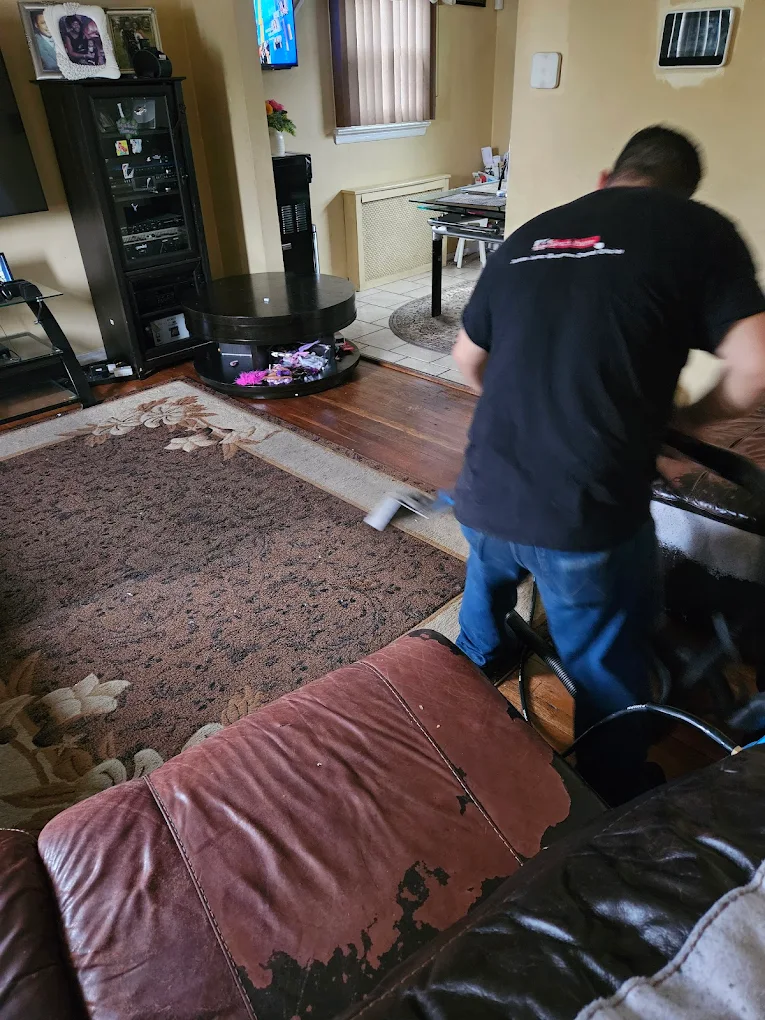
The fringe is cleaned as part of the whole rug, not on its own. Here is how a typical visit goes:
- Inspection. We look at the fibers, the dyes, the fringe and the way the rug is woven, and we check for weak or broken ends.
- Dry soil removal. We take out as much dry dirt, sand and grit as we can before any water touches the rug.
- Pre-treatment. Spots, pet areas and the fringe get a gentle treatment matched to the fiber.
- Controlled washing. The rug is cleaned with controlled water and soft tools, followed by a clean-water rinse so no soap is left behind.
- Fast drying. We pull out as much water as possible and use air movers, because slow drying is exactly what turns cotton brown.
- Grooming. We comb the fringe straight so it lies flat and even.
This is the same careful process we use on wool rug cleaning, Persian rugs and older pieces that need antique rug cleaning.
What cleaning can and cannot fix
Cleaning works very well on soil, grit, most spills and the dull gray look that builds up over years.
Some things are different. Brown color from slow drying can often be lightened, but it may not disappear. Dye that has moved into the fringe needs care, and some of it may stay. Old urine can leave a mark even after the smell is gone, and our pet stain removal service deals with the odor in the rug as well as the fringe.
Broken or crumbling fringe is wear, not dirt. Cleaning makes it neater but cannot grow strands back; the goal then is to stop the damage from reaching the knots. We tell you honestly what we see at the inspection.
What Oriental rug cleaning costs
Oriental rug cleaning is $99 per rug. Oversized rugs, silk rugs and rugs with heavy odor damage get a free quote after we see them. You get a clear price before we start, with no hidden fees, and new customers save $20 when they book online.
Fringe care is included. For other rugs, see our rug cleaning service and our page on area rug cleaning. The sofa that sits in front of the rug usually needs care too, and our upholstery cleaners in Freeport and nearby towns can do it on the same visit.
Where our crews clean Oriental rugs
We are based in Baldwin and work all over Nassau County and Suffolk County. On the South Shore, our crews clean rugs in Lynbrook and Valley Stream, and on the North Shore in Port Washington. In Suffolk, we work in Babylon, Smithtown and Medford, and the towns around them.
Get a free quote for your Oriental rug
Call us or book online. Tell us the rug size and what the fringe looks like, and we will give you a clear price and a time that works.
Oriental rug fringe FAQ
Can yellow fringe on an Oriental rug be made white again?
Fringe that is yellow from soil usually gets much brighter with a full wash and rinse. Fringe that turned brown from slow drying, sun or dye can often be lightened, but it may not go back to pure white. We tell you what to expect after we inspect the rug.
Should I use bleach on rug fringe?
No. Bleach weakens the cotton, makes the fringe break sooner and can take color out of the wool next to it. Blot spills with a dry white towel and leave the rest to a professional cleaning.
Can I cut off damaged fringe?
Please do not cut the fringe on a hand-knotted rug. It is the end of the threads that hold the knots, and cutting too close can let the ends of the rug start to come apart.
Do you clean only the fringe?
We clean the fringe together with the whole rug, because washing only the ends can leave a clean edge next to a dirty body. Fringe care is included in the price.
How much does Oriental rug cleaning cost on Long Island?
Oriental rug cleaning is $99 per rug. Oversized rugs, silk rugs and rugs with heavy odor damage get a free quote. You get a clear price before we start, and new customers save $20 when they book online.
Green Carpet Cleaning Long Island
Local for 20+ years. Based in Baldwin, NY. Same-day service available.