Carpeted Stairs and Stair Runners: Why They Get Dirty First
The stairs are often the first carpet in the house to look old. The front edges turn gray, the middle of each step goes flat, and the bottom step looks darker than the rest. Here is why it happens, what you can do at home, and how stairs are cleaned the right way.
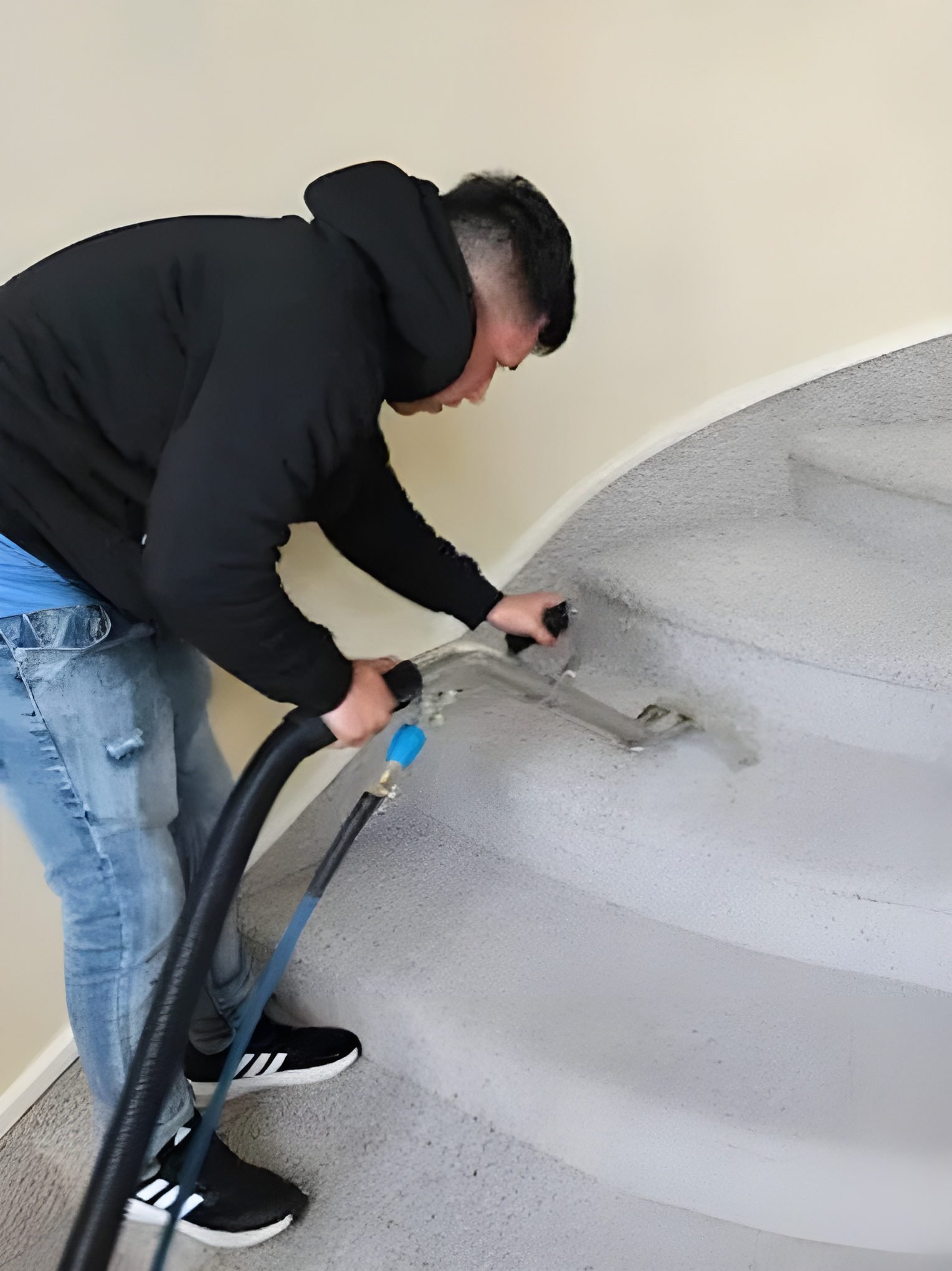
Stairs get dirty first because every step takes your full weight on a small area, people pivot and push off the front edge, and dirt falls down from one step to the next. The nosing (the front edge) and the bottom steps gray first. Vacuum the stairs often, keep grit at the door and treat spots fast. When the steps look gray or flat, a professional cleaning done step by step with a stair tool lifts the soil that a home vacuum cannot reach.
Stairs are one of the most common reasons people call us for a carpet cleaning service in Long Island, NY. The rooms may look fine while the staircase looks tired.
We are a Baldwin company, and our crews work in homes across Nassau and Suffolk, doing carpet steam cleaning in Nassau County and Suffolk for houses of every age and layout.
Why stairs get dirty before any room
Each step takes the full weight of every person, every time, on a piece of carpet not much bigger than a shoe. That pressure pushes dirt deep into the pile.
Stairs also get more turning and pushing than a floor. You push off the front edge going up and land on it going down. That rubbing grinds grit into the fibers, and they start to look gray.
Then there is gravity. Sand, crumbs and pet hair fall from the top steps to the lower ones, so the bottom of the staircase collects dirt from the whole flight. The same thing happens in hallways and doorways, and our guide on gray traffic lanes in carpet explains how those paths form.
Where the wear shows up first
- The nosing: the rounded front edge of each step, where the carpet bends and gets kicked.
- The middle of each tread: where feet land, so the pile goes flat.
- The bottom three steps: they get dirt from above and from the door below.
- The side by the handrail: people hold the rail and step on the same spot, often with one hand full.
Long Island stairs we see most often
Colonials: a long, straight flight from the front hall to the bedrooms, often with wall-to-wall carpet right by the front door. Grit from the driveway reaches the bottom step within a few feet.
Split-levels and high-ranches: two or three short flights, with a lot of turning between them. These houses are common in towns like Levittown and Centereach, and the short flights near the entry get very heavy use.
Basement stairs: carpeted steps down to a finished basement take kids, laundry and pets, and the bottom step sits near a concrete floor that can feel damp.
Curved staircases: the narrow inside edge of each step gets the most traffic and shows wear first.
Wall-to-wall stair carpet vs a stair runner

Wall-to-wall stair carpet covers the whole step, from wall to wall, and is usually wrapped tightly around each nosing. It hides the wood completely, and dirt collects in the corners where the carpet meets the wall and the riser.
A stair runner is a strip of carpet down the middle of wood stairs, with the wood showing on both sides. It is held with staples or rods, and its edges can fray where people step off-center.
A loose runner rug at the bottom of the stairs is a separate piece, and our area rug cleaning service takes care of it.
| Part of the stairs | Wall-to-wall carpet | Stair runner on wood |
|---|---|---|
| Where dirt hides | Corners at the wall and the back of each step | Wood edges beside the runner and under the rods |
| First sign of wear | Gray, flat nosing on every step | Gray center and frayed edges |
| During cleaning | Step-by-step stair tool, corners first | Stair tool on the runner, water kept off the wood |
| What to check first | Loose carpet at the nosing | Loose staples, missing rods, torn edges |
Home habits that make stairs worse
Skipping the stairs
The stairs often get vacuumed less than any room. That is exactly backwards.
Shoes on the steps
Sand, salt and grit from the driveway get ground right into the nosing.
Too much spot cleaner
Soaking a step leaves soap behind. Sticky soap grabs new dirt, and the spot turns darker than before.
Renting a big machine
A floor machine does not fit on a step, so edges get overwet and corners missed.
If a spot keeps coming back after you clean it, the problem is usually leftover soap or a spill that soaked into the pad. Our post on why a carpet stain comes back after cleaning explains what is going on.
Stair care between cleanings
- Vacuum the stairs at least once a week with the hose and a small brush tool, top to bottom, so dirt falls to steps you have not done yet.
- Keep a good mat inside and outside the front door, and a second one at the basement door.
- Ask everyone to take shoes off before going up, especially in winter when road salt and slush come in.
- Blot spills right away with a dry white towel. Press, do not rub.
Keep a small cordless vacuum on the landing. If it is right there, the stairs get a two-minute clean every few days instead of a big job once a month.
Kids, pets and stairs
Dogs run up and down the stairs and cats sleep on the landing. Muddy paws in the fall leave a mark on almost every step; our guide on muddy paws and wet leaves has tips for that season.
A pet accident on a step soaks into the pad below. Our pet stain and odor removal treats that kind of spot, and regular carpet stain removal handles juice, coffee and food that kids carry upstairs.
If you have small children or pets that lie on the steps, our organic carpet cleaning uses eco-friendly, non-toxic products, safe for kids and pets.
How professional stair cleaning works
Stairs cannot be cleaned with the big floor wand, so each step is done by hand with a smaller tool:
- Walk-through. We look at the steps, the nosing, the landing and any runner, and check for loose carpet, rods or staples.
- Dry soil removal. Each step is vacuumed, including the corners and the back edge, so sand and grit come out before any water goes on.
- Pre-treatment and agitation. Gray nosings, spots and traffic areas get a pre-treatment worked gently into the pile.
- Hot water extraction. A truck-mounted or portable extractor with a stair tool rinses each tread and riser and pulls the dirty water right back out.
- Clean-water rinse. So no soap is left to attract new dirt.
- Drying. We pull out as much moisture as we can and use air movers when they help, then tell you when it is safe to walk on the steps. Walk slowly in clean socks for the first few hours and hold the rail.
This is the same method we use for steam carpet cleaning in the rest of the house, just with a tool made for steps. Stairs often dry faster than a full room; see how long carpet takes to dry after professional cleaning.
Before we arrive, take shoes, baskets and toys off the steps. It saves time on the visit.
What cleaning can and cannot fix

Cleaning works well on the gray look, packed-in soil, pet hair and most spills.
Some things are wear, not dirt. Carpet worn thin on the nosing will not grow new fibers, snagged loops need repair, and a torn runner needs an installer. We tell you honestly what we see before we start, so you know what to expect.
Not worn through and not moving under your feet? Then a cleaning is worth trying before new carpet.
What stair cleaning costs
Carpet cleaning is $99 per room (one room, any size). Stairs get a free quote, because a short split-level flight and a long curved staircase are very different jobs. You get a clear price before we start, with no hidden fees, and new customers save $20 when they book online.
If guests are coming or you have a move date, ask about same-day carpet cleaning. Same-day service is available when the schedule allows.
Where our crews clean stairs
We are based in Baldwin and work all over Nassau County and Suffolk County. In Nassau, our crews work in Elmont and Massapequa, along with Levittown. In Suffolk, we clean stairs in Deer Park and Lindenhurst, and in Centereach and the towns around it.
Get a free quote for your stairs
Call us or book online. Tell us how many flights of stairs and how many rooms you have, and we will give you a clear price and a time that works.
Carpeted stairs FAQ
Why do my carpeted stairs look dirtier than the rest of the house?
Every person who goes up or down puts full weight on a small piece of carpet, often with a twist, and grit falls from step to step. The front edge of each step, the nosing, takes the most wear. So stairs gray faster than a bedroom that gets the same number of visits.
How do you clean carpeted stairs?
Step by step. We start with dry soil removal, pre-treat the gray areas and spots, then a stair tool rinses each step with hot water extraction and pulls the dirty water back out.
How much does stair carpet cleaning cost?
Stairs get a free quote, because a short split-level flight and a long curved staircase are very different jobs. Carpet in rooms is $99 per room (one room, any size). You get a clear price before we start, and new customers save $20 when they book online.
Can you clean a stair runner on hardwood stairs?
Yes. We clean the runner in place and keep water off the wood on both sides. If the runner is loose, torn or the rods are missing, we will tell you before we start, because cleaning will not fix those problems.
How long before we can walk on the stairs again?
Usually a few hours, depending on the carpet and the air in the house. Walk carefully in clean socks at first and skip shoes until the carpet feels dry.
Green Carpet Cleaning Long Island
Local for 20+ years. Based in Baldwin, NY. Same-day service available.