Why a Carpet Stain Comes Back After Cleaning (Wicking)
The spot was gone when the carpet was wet. Two days later it is back. This is called wicking, and it is one of the most common carpet questions we get. Here is why it happens, how to tell it apart from other problems and what fixes it.

A stain that comes back a day or two after cleaning is usually wicking. Part of the spill soaked into the carpet backing or the pad. When the carpet dries from the bottom up, moisture rises to the fiber tips and carries that old soil with it. A spot that returns weeks later is more often sticky residue that catches new dirt. Both can usually be fixed with a targeted re-treatment, strong extraction and fast drying.
You spent the money, the carpet looked great, and now there is a brown shadow right where the coffee went down. Usually the spill was simply deeper than anyone could see. Good carpet stain removal across Suffolk County and Nassau starts with knowing where the stain really lives.
Many people find us looking for carpet steam cleaning across Nassau County, and returning spots are one of their first questions. Here are the reasons in plain words.
What wicking actually is
Carpet has layers. On top are the fibers you walk on. Under them is the backing that holds the tufts, and under that, in most homes, is a foam or felt pad. A big spill, like a full glass of juice, a pet accident or a tipped mop bucket, does not stay on top. It runs down the fibers and spreads into the backing and the pad.
Blotting or cleaning removes the visible part, but the deep part stays. As the carpet dries, water moves from the wet bottom layers toward the dry air at the surface. It travels up the fibers like oil up a lamp wick, and it brings dissolved soil and color with it. The water leaves at the tips, the soil stays behind, and the spot is back.
The trade magazine Cleaning & Maintenance Management explains that soils from a wicking spot collect at the tips of the carpet tufts, not down the whole yarn. That is a useful clue, as you will see below.
Three different reasons a spot returns
Not every returning spot is wicking. These are the three main causes, and each one has a different fix.
| What you see | Most likely cause | What helps |
|---|---|---|
| Spot back within 1 to 2 days, same shape as before | Wicking from the backing or pad | Re-treat, extract deeply, dry fast |
| Spot slowly gets dark over 2 to 4 weeks | Sticky residue from soap or a spot spray | Clean-water rinse to remove the residue |
| Spot looks lighter or a different color than the carpet | Dye loss from bleach or a strong product | Not a cleaning problem; ask about options |
| Yellow or brown ring around the edge | Too much water on one spot (browning) | Light re-treatment and good airflow |
Wicking
Wicking shows up fast, usually as soon as the carpet is fully dry. The spot has the same shape as the original spill, sometimes a little bigger. It looks like a soft stain sitting on the very top of the pile.
Residue
Residue works slowly. Many store spot sprays and carpet shampoos leave a film that feels a little stiff or tacky. New dirt sticks to it, so the spot darkens week by week. The same article notes that a spot that returns after a few weeks is likely sticky residue. Our older post on removing tough stains from carpets explains why less product is usually better at home.
Run your hand over the spot. If it feels stiff or a little sticky, you are probably looking at residue, not wicking. Tell us when you call. It changes how we treat that area.
Which spills wick the most
Some spills are much more likely to come back than others. The common pattern is a large amount of liquid that had time to sink in.
- Coffee and tea, especially with milk and sugar
- Red wine, juice and soda
- Pet urine and vomit, which often reach the pad
- Muddy water tracked in from the yard or the beach
- Water from a leak, an overflowing tub or a radiator valve
- A spill that was soaked with water at home to “rinse it out”
Pet accidents are their own topic, because urine can leave odor in the pad as well as a stain. Our pet stain removal service and the older post on what to do when a pet pees on the carpet cover that in detail.
Why Long Island homes see more of it
A few things about local houses make wicking more common. Finished basements are carpeted over concrete, and that slab stays cool and slow to dry. Older homes often have thick, worn pads that hold liquid like a sponge. In the fall and winter, wet leaves, slush and road salt come in on boots, and the mudroom carpet or the hallway takes the hit day after day.
Slow drying is the key: the longer the carpet stays damp, the more soil rises. A cool basement in November wicks more than a sunny bedroom in June.

Home habits that make it worse
Pouring water
Flooding a spot to “rinse” it pushes the stain deeper into the pad, which feeds wicking later.
Rubbing hard
Scrubbing spreads the spill wider and frays the fiber tips so the spot looks fuzzy.
Too much spray
Heavy spot spray that is never rinsed out leaves a sticky film that pulls in new dirt.
Rental machines
Weak suction leaves the carpet wet for a long time, which is exactly what wicking needs.
The better way at home is simple: blot with a white towel, press hard, use very little water, and stop before the carpet is soaked.
How we fix a spot that keeps coming back
When a spot returns, we do not just go over it again the same way. We work from the bottom up.
- Look and testWe check if the spot is wicking, residue or dye loss, and test the carpet in a hidden area. You get the price before work starts.
- Dry soil removalThe area is vacuumed so loose grit does not turn into mud when it gets wet.
- Pre-treatment and agitationA spot treatment matched to the stain is worked gently into the pile and given time to act.
- Deep hot water extractionExtra slow passes with strong suction pull as much liquid as possible from the backing, not just the top.
- Clean-water rinseA rinse removes leftover product so nothing sticky is left behind.
- Fast dryingAir movers speed up drying so there is less time for moisture to rise.
For a heavy spill, we may place an absorbent towel over the spot with weight on top while it dries. The towel catches the soil as it rises, instead of the carpet fibers. Our steam carpet cleaning uses truck-mounted or portable extractors, so the suction is much stronger than a home machine.
What to do if a spot returns after our visit
- Do not scrub it or spray it with a store product.
- Take a photo and note the day it appeared.
- Blot it with a damp white towel, then lay a dry towel on top with a heavy book.
- Keep air moving in the room with a fan or the heat on.
- Call us at (516) 894-2930 so we can look at it.
Drying time decides how much wicks back. Open the doors to the room, run a ceiling fan and keep pets and people off the area until it feels dry. Our post on how long carpet takes to dry has more simple tips.
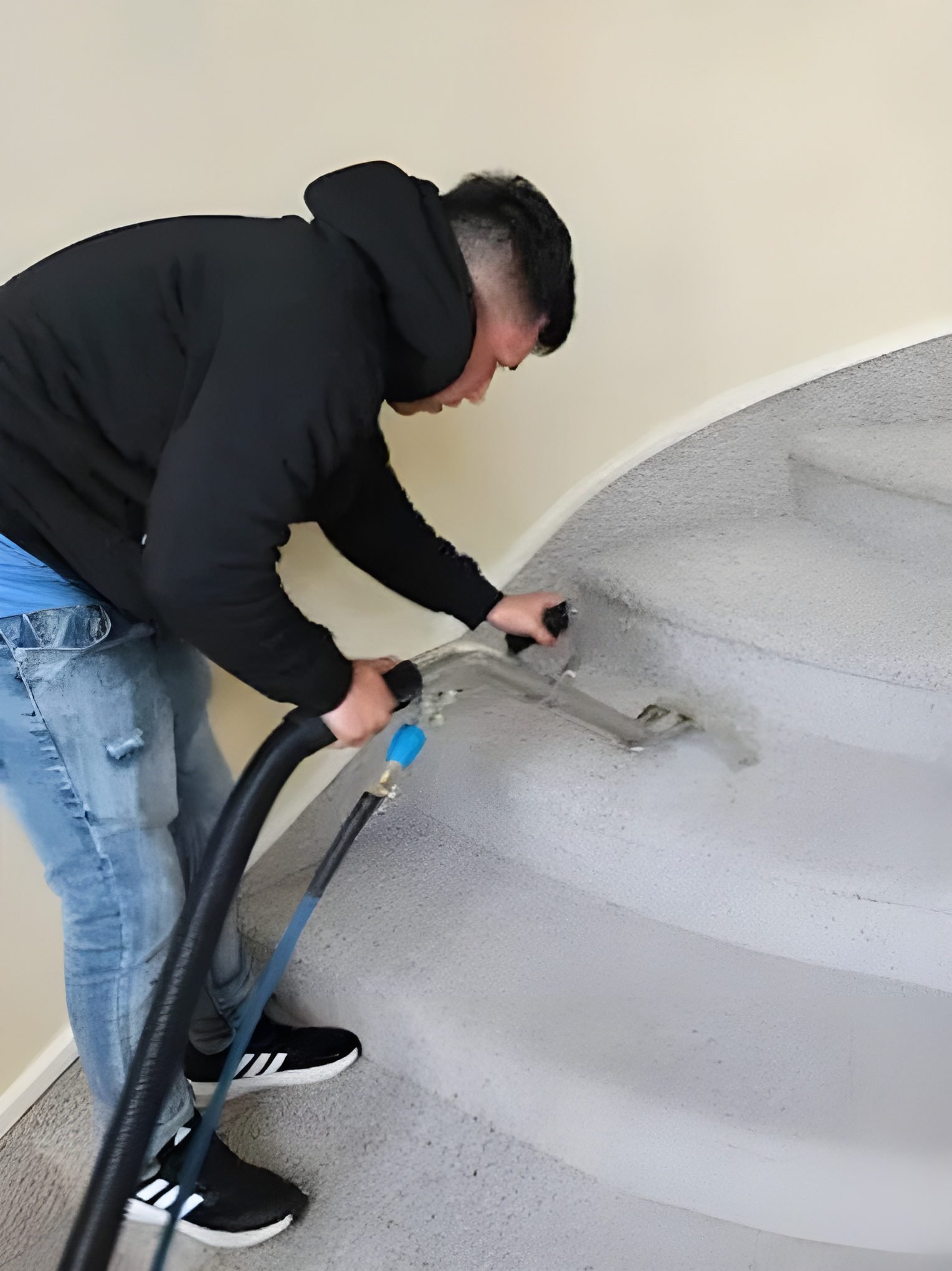
How to keep spots from coming back
Most wicking starts with the first ten minutes after a spill. Blot right away, use less liquid than you think, and never leave a big spill to “deal with later.” Vacuum high-traffic rooms often, because loose grit turns a small spot into a dark one.
Regular cleaning also leaves less built-up soil in the backing to wick up after the next spill. Our residential carpet cleaning and professional carpet cleaning pages explain the full service. Families with kids and pets often ask about our organic carpet cleaning, which uses eco-friendly, non-toxic products that are safe for kids and pets once dry.
What it costs
Carpet cleaning is $99 per room, one room, any size. Spot treatment on that room is part of the job. For stairs, large spills or many separate stains, we give a free quote and confirm the price before we start, with no hidden fees. New customers save $20 when they book online.
Area rugs wick too, often more, because they sit on a hard floor with nowhere for the liquid to go. See our area rug cleaning page for how rugs are handled.
Where our crews work
We are based in Baldwin and our crews work across Nassau County and Suffolk County, including Oceanside, Valley Stream and Westbury in Nassau, and Deer Park, Medford and Centereach in Suffolk.
Got a spot that keeps coming back?
Call Green Carpet Cleaning Long Island and tell us what was spilled and when. We will explain what we can do, confirm the price before we start, and new customers save $20 when they book online.
Returning carpet stains FAQ
Why did my carpet stain come back after cleaning?
Most often it is wicking. Part of the spill soaked into the backing or pad, and as the carpet dried, moisture rose to the surface and carried the old soil back up to the fiber tips.
How can I tell wicking from residue?
Wicking shows up within a day or two and has the same shape as the old spill. Residue darkens slowly over a few weeks and often feels stiff or sticky to the touch.
Can I fix a wicking spot myself?
You can blot it with a damp white towel, then cover it with a dry towel and a heavy book overnight. Avoid soaking it or using a lot of spot spray, which can make it worse.
Will a stain that reached the pad ever fully come out?
Many do with deep extraction and fast drying. Very large spills, such as a big pet accident or a leak, can leave the pad itself stained, and then the pad may need to be replaced. We will tell you honestly what we see.
How much does it cost to treat a returning spot?
Carpet cleaning is $99 per room, any size, and spot treatment is part of it. Stairs, rugs and large or many stains get a free quote. New customers save $20 when they book online.
Green Carpet Cleaning Long Island
Local for 20+ years. Based in Baldwin, NY. Same-day service available.