Gray Traffic Lanes in Carpet: Why They Appear and Can They Come Out?
That dark path from the front door to the kitchen did not happen overnight. Here is what a gray traffic lane really is, why vacuuming cannot fix it, what professional cleaning can bring back, and how Long Island families keep the lanes from coming back.

Gray traffic lanes are mostly oily soil and fine grit held in the fibers where people walk the most, plus crushed pile. Vacuuming cannot lift the oily film, but pre-treatment, agitation and hot water extraction usually remove most of the gray. Truly worn or faded fibers get lighter, not new. Carpet cleaning is $99 per room (one room, any size), and new customers save $20 when they book online.
Almost every home we walk into has one: a darker path across the living room, down the hall or in front of the sofa. It is not a stain, and it needs a different fix. It is also one of the main reasons people book professional carpet cleaning on Long Island, because no amount of vacuuming seems to touch it.
We are a Baldwin-based team that has done carpet steam cleaning in Nassau County and Suffolk County for more than 20 years. This guide explains what is in a traffic lane, how to tell soil from real wear, and what you can expect before you book.
What a gray traffic lane really is
A traffic lane is the part of the carpet that gets walked on far more than the rest of the room. It turns gray or dull, with soft edges instead of the clear outline of a spill.
Under a close look, a lane is a mix of three things. First, oily residue: cooking oil carried on socks, skin oils, lotion and street grime from shoe soles. Second, fine dry soil that the oily film catches and holds. Third, the pile is pressed flat, so it reflects light differently.
The oily film is the key. Loose dirt can be vacuumed up; dirt glued in place by oil stays, and each new layer makes the path grayer.
Where lanes show up in Long Island homes
Lanes follow the way your family really moves through the house. The same spots show up again and again:
- From the front door or the side door from the driveway into the living room.
- The doorway between the kitchen and the family room, where cooking oil rides out on socks.
- The upstairs hallway between bedrooms and the bathroom.
- The top and bottom steps of carpeted stairs, and the nose of each tread.
- The strip in front of the sofa where feet rest, and under a rolling desk chair.
Long Island weather adds fuel: beach sand in summer, wet leaves and mud in the fall, road salt and slush in winter. If your fall lanes look worse this year, our post on muddy paws and wet leaves covers the seasonal side of it.
Soil, crushed pile or worn fiber?
Most lanes are a mix, but one cause usually leads:
| What you see | Most likely cause | What cleaning can do |
|---|---|---|
| Gray or dark path, fibers still full | Oily soil and fine grit | Usually lifts most or all of the gray |
| Path looks darker from one side and lighter from the other | Pile pressed flat and lying in one direction | Agitation and grooming stand much of it back up |
| Fibers feel thin, fuzzy or rough, backing shows | Real wear from years of foot traffic | Cleaner and brighter, but the wear stays |
| Path lighter than the rest, not darker | Sun fading or color lost from wear | Cannot put the color back |
| Sticky feel, path gets dark again fast | Residue from home shampoo or spot sprays | A thorough rinse removes the residue |
A quick test you can do at home
Run your hand across the lane, then across carpet nobody walks on, like under a bed. If both feel the same and the lane only looks darker, it is mostly soil. If the lane feels thin or rough, there is wear. A white paper towel rubbed firmly on the lane that comes up gray means dirt that cleaning can remove.
Compare the lane with the carpet inside a closet. Closet carpet is close to how the room looked when it was new, so it shows you how far the color can come back.
Why vacuuming alone does not lift it

Regular vacuuming pulls out the dry grit that cuts fibers. But a vacuum works with air and a brush; it does not dissolve anything.
The oily film that holds the gray in place needs something to loosen it, some gentle work to break it free from the fibers, and water to carry it away. That is why a lane can look the same after a careful vacuum as it did before.
Vacuum the lanes slowly in two directions at least twice a week, and keep the bag or bin from getting too full. It will not remove the gray, but it slows down how fast the lane builds.
Home fixes that make lanes worse
It is natural to grab a spray or rent a machine, but some home fixes make the path come back darker and faster.
Lots of spot spray
Sprays left in the carpet dry into a sticky film, and the path grabs dirt faster than before.
Soaking the lane
Too much water sinks into the pad. As it dries, soil from below wicks back up to the top.
Hard scrubbing
A stiff brush frays and fuzzes the tips of the fibers, and the lane can look worse in the light.
No rinse
Cleaning solution that is not rinsed out keeps working as a dirt magnet for weeks.
That wicking effect is the same reason a spot sometimes comes back days after cleaning. Our guide on why a stain comes back after cleaning explains it step by step. If the lane has pet accidents in it too, those need their own treatment with our pet stain removal service.
What professional cleaning does to a lane
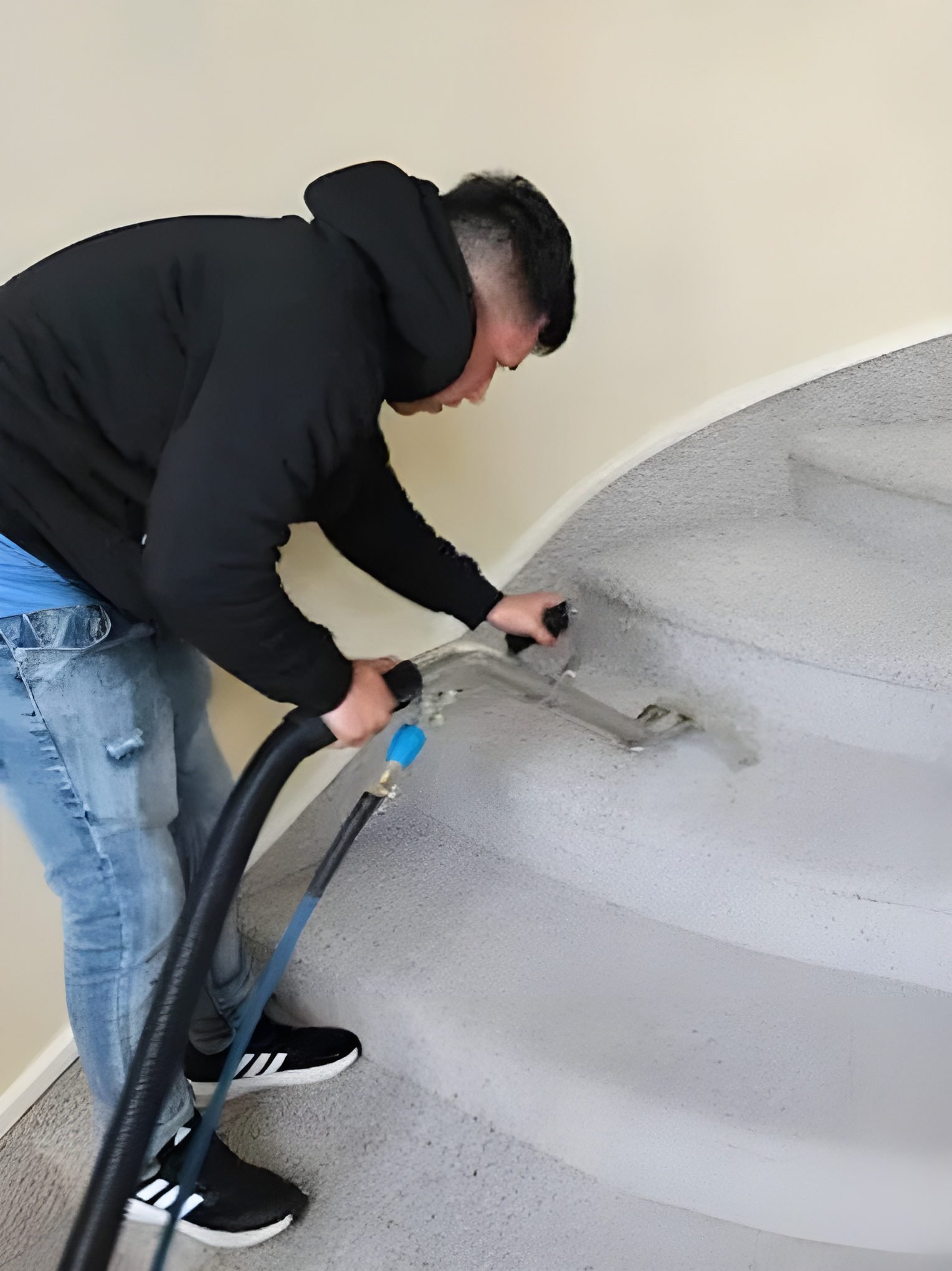
On a visit, the lanes get extra attention. The process is the same steam carpet cleaning we use everywhere, with extra time on the paths.
- Walk the room with youWe look at the lanes, test a hidden spot and confirm the price before any work starts.
- Dry soil removalLoose grit and sand come out of the pile first, so water does not turn them into mud.
- Pre-treatment and agitationThe lanes get a pre-treatment that loosens the oily film, worked gently into the fibers.
- Hot water extractionA truck-mounted or portable extractor flushes the carpet and pulls the loosened soil back out.
- Clean-water rinseA rinse pass removes leftover solution, so the lane does not turn sticky and gray again.
- Grooming and dryingThe pile is set upright and air movers are used for faster drying.
Our products are eco-friendly and non-toxic, safe for kids and pets.
What can come back and what cannot
For soil-based lanes, the gray usually lifts out and the path blends back into the room. Crushed pile often stands back up once it is cleaned and groomed.
Worn fibers are different: the lane will look cleaner and brighter, but thinned or frayed tufts stay that way, and so does sun fading by a big window. Cleaning removes dirt; it does not add color.
Some older wall-to-wall carpet is near the end of its life, and we will say so before you spend money. If you are about to sell, our post on carpet cleaning before you sell your home can help you weigh it.
In early November, our crews cleaned a carpeted room in Merrick and a carpeted staircase in Roosevelt, two very common lane jobs: the path from the door or up the stairs gets gray long before the rest of the house.
How to keep the lanes from coming back
You cannot stop people from walking, but you can slow the lanes down:
- Put a mat outside and a washable rug inside each door, including the garage and side doors.
- Make shoes off a house rule, especially in winter when road salt is out.
- Move furniture a few inches now and then so people do not walk exactly the same line.
- Wipe kitchen floors often, so less oil travels out on socks.
- Have the main paths cleaned before the lane gets deep: about every 6 to 12 months in a busy home with kids or pets. Our guide on how often to clean your carpets has more detail.
A cleaning in late fall, before the salt season, and another in early spring after it, keeps most Long Island lanes from getting set in.
Prices and where our crews work
Our residential carpet cleaning is $99 per room (one room, any size). Stairs, hallways and larger homes get a free quote, confirmed before work starts, with no hidden fees. New customers save $20 when they book online. If a lane also has old spots in it, ask about our stain removal on the same visit. Same-day carpet cleaning is available when the schedule allows.
We are based in Baldwin, and our crews work all over Nassau County and Suffolk County, including Valley Stream, Lynbrook and Oceanside in Nassau, and Deer Park, Bay Shore and Dix Hills in Suffolk.
A fabric sofa is $119, and you can find upholstery cleaners near you in Freeport and across Long Island. Mattresses are $99, and we offer mattress cleaning services in Levittown and nearby towns on the same visit.
Get the gray out of your carpet
Call us or book online. We look at the lanes with you, tell you honestly what will come out and confirm the price before we start.
Gray traffic lanes FAQ
Can traffic lanes in carpet be removed?
Lanes caused by oily soil and grit usually come out with pre-treatment, agitation and hot water extraction. Lanes caused by worn or faded fibers get cleaner and lighter, but the wear itself cannot be undone.
Why does my carpet look gray only where we walk?
Those paths collect oils from feet, shoes and the kitchen, and the oil holds fine grit in the fibers. The pile also gets crushed there, so it reflects light differently from the rest of the room.
Why did the lane come back soon after I cleaned it myself?
Usually because cleaning solution was left in the carpet or soil wicked up from the pad as it dried. A clean-water rinse and good extraction prevent both.
How much does it cost to clean a room with traffic lanes?
Carpet cleaning is $99 per room, one room of any size. Stairs, hallways and larger jobs get a free quote, confirmed before work starts. New customers save $20 when they book online.
How long until I can walk on the carpet again?
You can walk on it carefully in clean socks soon after we finish. Air movers speed up drying.
Green Carpet Cleaning Long Island
Local for 20+ years. Based in Baldwin, NY. Same-day service available.