Muddy Paws and Wet Leaves: Fall Carpet Problems on Long Island
Rainy weeks, soggy yards and a dog who wants in and out all day. Here is what to do on the day the mud comes inside, what makes it worse, and when a professional cleaning is the right move.
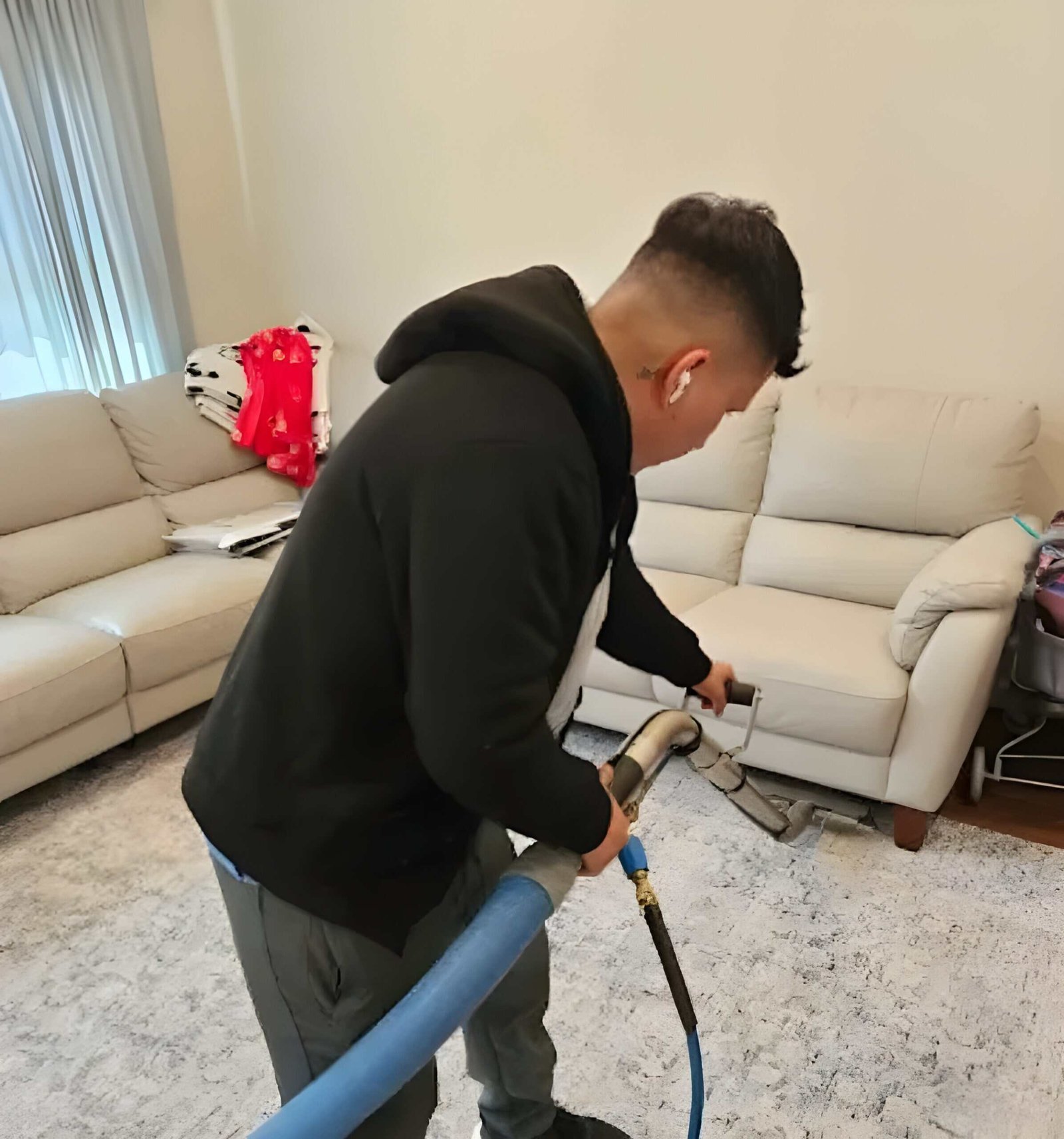
Let wet mud dry completely, then vacuum it up before you wipe anything. Blot wet paw prints with plain water and a white towel; never scrub. Pick up wet leaves fast, because the brown color in them can stain light carpet. If marks keep coming back, the room smells like wet dog, or the traffic path near the back door has turned dark, a hot-water extraction cleaning removes the soil that home cleaning only spreads around.
From October to December, Long Island yards turn soft, and every trip outside brings a little of the yard back in on paws and shoes. This guide covers the mud, the leaf stains and the wet-dog smell: what you can safely handle yourself and when our pet stain removal on Long Island is the faster fix.
We are a carpet steam cleaning company in Nassau County and Suffolk, based in Baldwin, so we see these carpets every fall. The good news: most fall mud is plain soil and water, and it comes out well when it is handled the right way.
Why fall is the hardest season on Long Island carpet
Summer brings sand and winter brings salt, but fall brings water and soil together, and carpet handles that mix worst. Dry dirt mostly vacuums out. Wet dirt is pushed into the pile by every step and dries there as a crust the vacuum cannot lift.
Long Island houses add their own twists: back doors that open straight onto the lawn with no mudroom, and South Shore yards near the water that stay wet for days after a storm. Short days make it worse, because dogs go out in the dark and nobody sees the mud until morning.
What to do on the day mud comes in

The first rule surprises most people: do not attack wet mud. Rubbing it pushes the soil deeper and spreads it wider, so a small paw print turns into a smear the size of a dinner plate. Wet soil with clay in it stays sticky until it dries.
Instead, scrape off thick clumps with a spoon, working from the outside of the spot toward the middle. Then leave it alone; a fan helps it dry faster. Once it is completely dry and crumbly, vacuum slowly from several directions. Most of the mud lifts right out.
What is left is usually a light brown shadow. Blot it with a white cloth dampened in plain cool water: press, lift, repeat. Keep the carpet damp, never soaked. If some brown remains after it dries, stop; more water and more products turn a small spot into a ring.
Keep an old towel by the back door in rainy weeks and wipe between the toes, where most of the mud hides. Thirty seconds at the door saves a lot of carpet work.
Wet leaves and brown stains
A dry leaf that blows in is harmless. A wet, flattened leaf stuck to a shoe or a dog’s coat is different: left on light carpet for hours, it can leave a brownish or yellowish mark in the shape of the leaf.
That color comes from tannin, a natural plant dye that Cleanfax describes as found in many plants, including tea leaves, bark and stalks. It is the same kind of stain as spilled coffee or tea, and it moves with water.
So pick wet leaves up by hand instead of vacuuming them soggy, and blot the spot with cool water and a white cloth. If a brown leaf mark stays after one or two gentle tries, our stain removal service uses the right treatment for plant-type stains instead of guessing.
The wet-dog smell in carpets and rugs
A soaked dog shakes off and lies down in a favorite spot, often the family room rug. Repeat that every rainy day for a month and the rug smells like wet dog even when the dog is dry.
The smell lives in the moisture, body oils and outdoor dirt that come off the coat. Sprays and powders only cover it for a while, and some leave residue that grabs new dirt. Washing the fibers and pulling the dirty water back out is what removes it. A sharp, ammonia-like smell is different: that points to urine, not mud.
Rugs need extra care
Wool rugs hold a lot of water and dry slowly on a cold floor, and a rug that stays damp underneath smells worse. Lift a corner after a wet day and check. Our area rug cleaning washes and dries the whole rug, not only the top.
Common mistakes that make fall mud worse
Most fall damage comes from trying too hard. Watch for these four habits.
Scrubbing wet mud
It drives soil deeper and spreads the spot. Let it dry, then vacuum.
Too much water
Soaking the spot can wet the pad underneath. As it dries, the dirt can wick back up as a brown ring.
Strong spot sprays
Many leave a sticky film, so the spot gets dirty again faster.
Rubbing back and forth
Rubbing frays the fiber tips and leaves a fuzzy patch. Press and lift instead.
If a spot came back a few days later, see our post on why a carpet stain comes back after cleaning.
Where fall dirt collects in a Long Island home
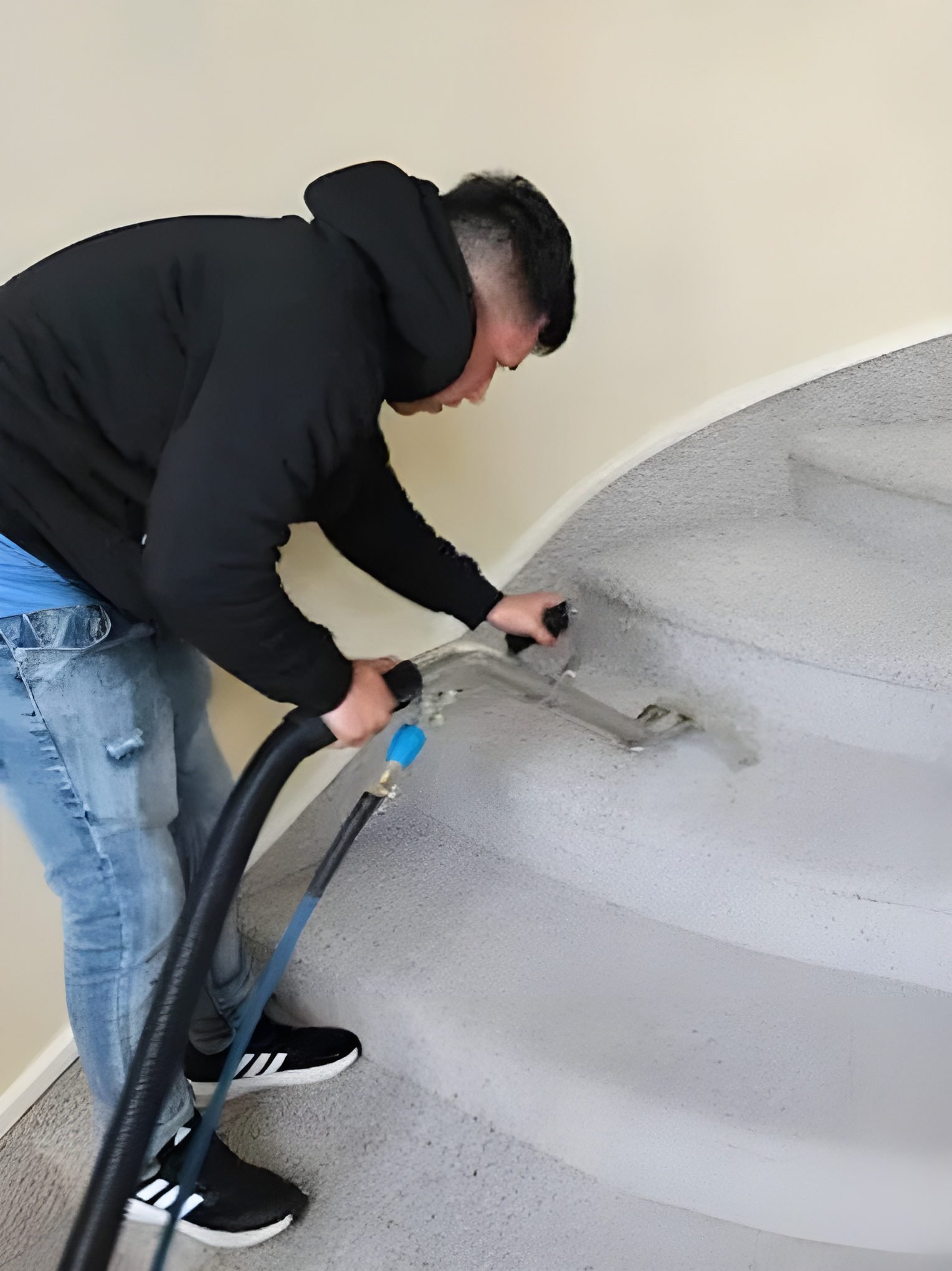
Fall soil does not spread evenly. It follows the paths people and pets walk, so when we walk into a house this time of year, we check the same places first. The first few feet inside the back door or slider are almost always the darkest part of the carpet.
Next come carpeted stairs, especially the bottom steps and the front edge of each tread, where wet feet push off; in split-levels, the short flights near the entry. Then the path to the water bowl and dog bed, and the rug where the dog dries off.
Walkout basements are their own case: the carpet is cooler and dries slower. If it smells musty with no mud in sight, read our guide to musty basement carpet.
Home cleaning or a professional cleaning?
A fresh paw print is a home job. A whole season of mud is not.
| Problem | At home | When to call a pro |
|---|---|---|
| Fresh paw prints | Let dry, vacuum, blot with plain water | Brown shadow stays after drying |
| Dark path from the back door | Vacuum more often | Path stays gray after vacuuming |
| Wet-dog smell in a rug | Dry the rug, check underneath | Smell returns every damp day |
Gray paths are not stains; they are packed soil, and only washing brings the color back. Our steam carpet cleaning is made for exactly this kind of buildup.
What our crew does with mud-season carpet
A professional visit removes the soil instead of moving it around. Here is how our crew handles a carpet after a muddy fall.
- Dry soil removalDried mud and grit are vacuumed out before any water touches the carpet.
- Pre-treatment and agitationPaths, stair edges and paw prints are pre-treated and worked so the soil lets go.
- Hot water extractionA truck-mounted or portable extractor rinses with hot water and pulls the dirty water out at once.
- Clean-water rinseNo sticky residue is left to attract new mud.
- Air movers for faster dryingFans speed drying in cool fall rooms and basements.
Our products are eco-friendly and non-toxic, safe for kids and pets; see our organic carpet cleaning. Muddy paws also find the sofa; our upholstery cleaning takes care of cushions on the same visit.
Simple habits for the rest of the season
You cannot stop the rain, but you can keep more of the yard outside.
- Put a washable mat outside and another inside each door the dog uses.
- Rake or blow leaves off the deck stairs and walkway so they are not carried in.
- Vacuum traffic paths twice a week in rainy weeks.
- Let wet rugs dry fully; lift a corner so air gets underneath.
Winter brings road salt on top of any mud still in the carpet; our winter carpet care tips pick up from here.
Booking after the leaves are down and before holiday guests arrive means a clean carpet for the holidays and a fresh start before salt season.
Pricing and where our crews work
Our pricing is simple: carpet cleaning is $99 per room, one room of any size. Tell us about pet and mud spots when you call, so the crew comes ready for them. Rugs, sofas and stairs get a free quote, and we confirm the price before work starts, with no hidden fees. New customers save $20 when they book online, and our same-day carpet cleaning is available when the schedule allows.
We are based in Baldwin and our crews work across Nassau County and Suffolk County. That includes Levittown and Lynbrook, area rugs in Rockville Centre, and Suffolk homes in Islip, Holtsville and Lindenhurst. For a whole-house visit, our residential carpet cleaning page explains how we plan bigger jobs.
Ready to get the fall mud out?
Call Green Carpet Cleaning Long Island for a free quote. Carpet cleaning is $99 per room, any size, and new customers save $20 when they book online. Same-day service is available across Nassau and Suffolk County.
Fall mud and pet stain FAQ
Should I clean mud out of carpet while it is still wet?
No. Scrape off thick clumps and let the mud dry completely. Dry mud vacuums out easily; rubbing wet mud spreads it. Blot any shadow left with plain cool water.
Why does my rug smell like wet dog even when the dog is dry?
Moisture, body oils and outdoor dirt build up in the fibers when a wet dog lies on the same rug again and again. Sprays only cover it; washing the rug removes the cause.
Can leaves really stain carpet?
Yes. Wet leaves left on light carpet can leave a brown or yellow mark from natural plant dye. Blot with cool water; if it stays after two gentle tries, call us.
How much does carpet cleaning cost for muddy rooms?
Carpet cleaning is $99 per room, one room of any size. Rugs, sofas and stairs get a free quote, and new customers save $20 when they book online.
Are your products safe for my dog?
Our products are eco-friendly, non-toxic and safe for kids and pets. Keep pets out of the room until the carpet is dry.
Green Carpet Cleaning Long Island
Local for 20+ years. Based in Baldwin, NY. Same-day service available.