Tile Cleaning Service on Long Island: How Dark Grout Comes Clean Again
Why grout turns gray, what you can safely do at home, and what a professional tile cleaning visit really does in a Nassau or Suffolk County kitchen, bathroom or entryway.
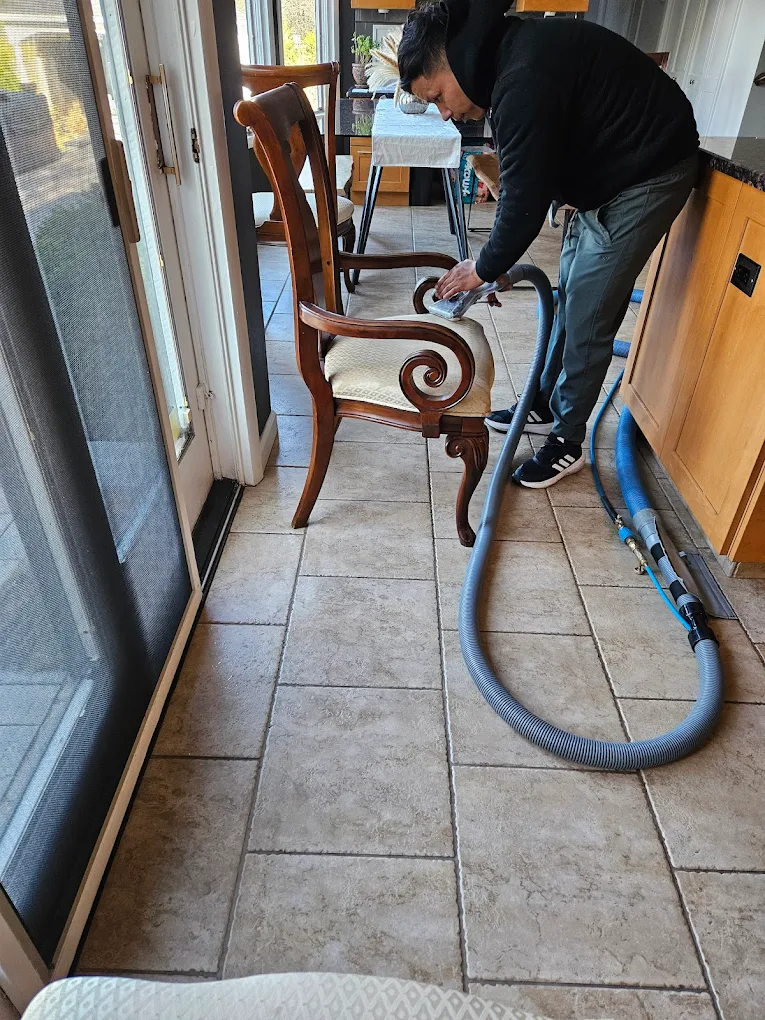
Grout is porous, so mop water, soap film, cooking grease and tracked-in dirt sink into it and turn it gray. Weekly mopping only cleans the top. A professional tile and grout cleaning loosens that buildup with a pH-balanced cleaner and brushing, then flushes the grout lines with hot water under pressure and pulls the dirty water straight back out. Sealing afterward helps the clean result last longer.
If your kitchen floor looks clean after you mop but the grout lines stay dark, you are not doing anything wrong. Mopping simply cannot reach the dirt that lives inside the grout. This guide explains why that happens and how our tile cleaning service on Long Island gets floors back to their real color, with no guessing about the steps or the price.
Most people know us as a Long Island carpet cleaning company, but hard floors are part of almost every home we walk into: the kitchen, the bathrooms, the front hall, the mudroom and often a finished basement. Below you will find what works at home, what can damage tile or stone, and how to know when it is time to call in the hot-water equipment.
Why grout turns dark even when you mop every week
Grout is the cement-based filler between your tiles. Unlike the glazed face of a ceramic or porcelain tile, grout is full of tiny pores. Anything liquid that sits on the floor for a moment, and anything that is pushed around by a mop, settles into those pores. Over months and years the grout slowly changes from its original color to tan, gray or almost black.
The mop itself is part of the problem. When you mop a whole kitchen with one bucket, the water gets dirtier with every pass, and the dirty water runs into the lowest spot on the floor: the grout lines. The tile dries looking fine, while the grout has just received another thin layer of grime.
Soap film makes it worse
Many floor cleaners leave a residue if they are not rinsed. That sticky film grabs new dirt quickly, so the floor feels tacky under bare feet and looks dull again a few days after cleaning. This is one reason “clean” tile can still feel dirty, and it is something a rinse-and-extract cleaning removes.
Long Island life adds its own dirt
Beach sand in summer, wet leaves in fall and road salt and slush in winter all come through the front door. Sand acts like sandpaper on tile finishes, and salt leaves a white crust that soaks into grout near entryways. If you have pets, paws carry in mud and leave oily marks along the routes they walk every day.
Look at the grout under the refrigerator edge or in a closet corner where nobody walks. That is close to the original color. If the grout in your walkways is many shades darker, the problem is buildup, not stained grout, and it usually cleans up well.
Tile types in Long Island homes and how each one is cleaned
Not every hard floor should be treated the same way. Before any cleaning, a good technician checks what the tile is made of, because the wrong product on the wrong surface can etch or dull it for good.
Ceramic and porcelain are the most common tiles in kitchens and bathrooms across Nassau and Suffolk County. They handle hot water and alkaline cleaners well. The grout between them is where nearly all the dirt sits.
Natural stone such as marble, travertine, limestone and slate is softer and often reacts to acids. Vinegar, lemon-based cleaners and many bathroom sprays can leave dull, rough spots on marble. Stone needs a neutral cleaner and gentler handling.
Older vintage tile, like small hex or penny tile in older Long Island homes, has many more grout lines per square foot. It looks beautiful once clean, but it takes more time, so it is worth mentioning when you ask for a quote.
| Method | What it reaches | Good for | Limits |
|---|---|---|---|
| Mop and bucket | Tile surface only | Weekly upkeep | Pushes dirty water into grout lines |
| Hand scrubbing with a brush | Top layer of grout | Small spots, one shower | Slow, hard on knees, no extraction |
| Home steam mop | Surface, some loose grime | Light refresh on sealed tile | No suction, so loosened dirt stays on the floor |
| Professional hot-water extraction | Deep in the grout pores | Dark grout, greasy kitchens, entryways | Needs a pro visit and a clear floor |
Home cleaning mistakes that can damage tile and grout
Most damage we see on tile floors does not come from age. It comes from strong products used with good intentions. Before you try anything at home, read these warnings.
Mixing cleaners
Never combine bleach with ammonia or with acids. The Washington State Department of Health warns that bleach with ammonia makes toxic chloramine gases, and bleach with an acid such as vinegar gives off chlorine gas.
Acid on stone
Vinegar and lemon cleaners can etch marble, travertine and limestone, leaving dull spots that cleaning cannot fix.
Bleach on colored grout
Bleach can lighten dark or colored grout unevenly, so the lines look blotchy after it dries.
Wire brushes
Metal bristles scratch glazed tile and wear grout down. A stiff nylon brush is safer.
Another common mistake is using too much product. More soap does not mean more clean. It means more residue, which brings the gray color back faster. If you clean at home, use the amount on the label and rinse with clean water afterward.
What a professional tile and grout cleaning includes
A professional visit is not just a stronger mop. The difference is that the dirt is pulled off the floor and out of the house, instead of being spread around. Here is how our crews handle a typical tile floor.
- Dry soil removalLoose dirt, sand and hair are vacuumed up first, so the cleaning solution works on stuck-on grime instead of surface dust.
- Pre-treatment and agitationA professional, pH-balanced cleaner goes down on the tile and grout. The grout lines are then brushed to loosen deep dirt and film.
- Hot water under pressureHot water and cleaning solution are sprayed into the grout pores under pressure, which forces the loosened dirt up to the surface.
- Extraction at the same momentOur truck-mounted or portable extractor vacuums the dirty water right away, so it does not settle back into the grout.
- Rinse and speed dryingA clean-water rinse leaves no sticky residue behind, and air movers help the floor dry faster.
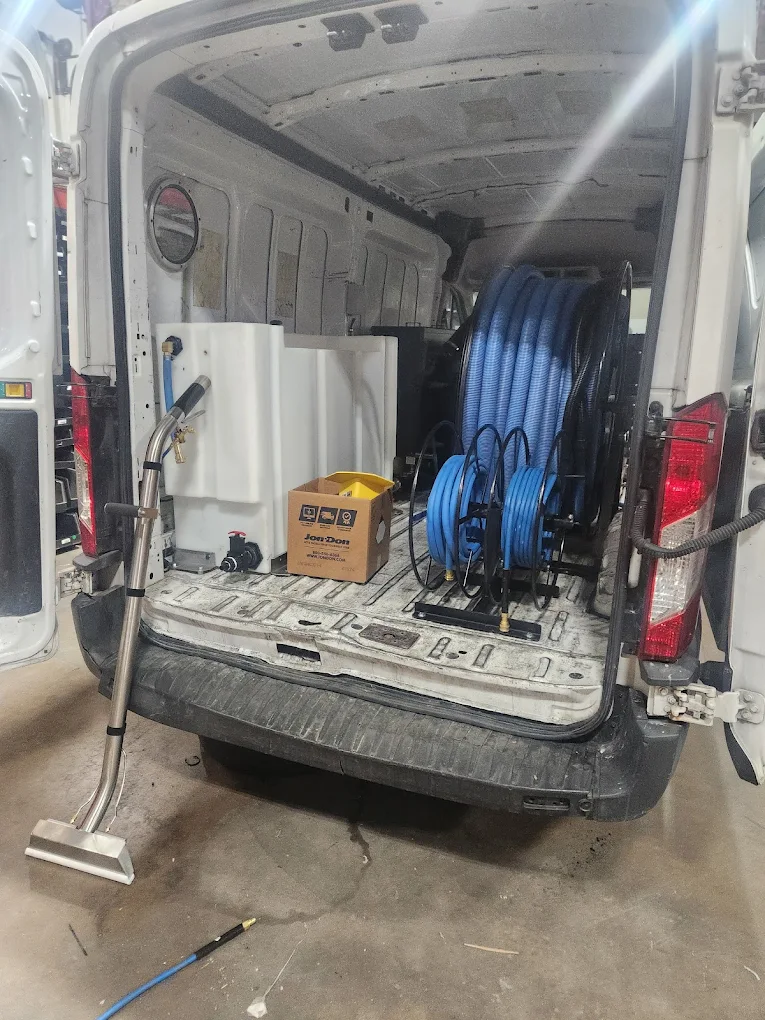
Because the dirty water is removed right away, the floor is not left soaking. That matters in older houses where water can find its way under loose tiles. If our technician spots a cracked or loose tile while cleaning, they will point it out so you can decide what to do about it.
The same hot-water approach is what we use for our hard floor cleaning service, adjusted to the surface. Stone gets a neutral cleaner, very soiled kitchen tile gets more dwell time and agitation, and a bathroom with shower grout gets extra attention in the corners.
Room by room: where grout needs the most help
Kitchens
Kitchen tile collects cooking grease, sauce drips and crumbs. Grease is the reason kitchen grout often turns darker than any other room. The worst spots are in front of the stove, at the sink and around the trash can. These areas usually need longer pre-treatment.
Bathrooms and showers
Bathrooms deal with soap scum, hard water marks and moisture. Shower grout stays wet for hours each day, which is why dark spots appear in corners and along the bottom row. Bathroom floors also collect hair spray and body lotion residue, which make grout sticky.
Entryways and mudrooms
The first few feet inside the front or side door take the most punishment: sand, salt, leaves and wet shoes. If your home has tile at the entry, cleaning it before winter and again in spring keeps salt from sitting in the grout for months. Our winter carpet care tips cover how to stop that same salt from reaching the carpet past the doorway.
Basements and laundry rooms
Finished basements on Long Island often have tile because it handles moisture better than carpet. Still, damp air and laundry detergent drips leave film on grout. A deep clean here also helps you spot any water coming in at the walls.
Mold and mildew in bathroom grout
Black or green spots in shower corners are a common worry. On hard surfaces like tile, the EPA mold cleanup guide says to scrub mold off with detergent and water and dry completely. Drying is the key word. If the shower never fully dries, spots come back.
A professional cleaning removes the buildup that mildew feeds on and flushes the grout pores, which makes the surface easier to keep clean. What cleaning cannot do is fix the cause. If spots keep coming back fast, or grout is crumbling or missing, there may be a leak or a ventilation problem behind the wall. That is a job for a plumber or contractor, and it is better to find out early.
Run the bathroom fan during the shower and for a while after, and squeegee the walls before you step out. Less water left on the grout means fewer dark spots.
Sealing grout after a deep clean
Clean grout is like a dry sponge: it will soak up the next spill quickly. A penetrating grout sealer fills the pores so liquids bead on top for longer, which gives you time to wipe them up. It does not make grout stain-proof, and it does not stop dirt from collecting on top. It does make weekly cleaning much easier.
Sealer should only go on grout that is clean and completely dry. Sealing dirty grout simply locks the gray color in. That is why sealing always comes after the deep clean, not instead of it. How often to reseal depends on the product used and how much traffic the floor gets, so ask your technician what makes sense for your rooms.
If you are not sure whether your grout was ever sealed, try a drop of water on a grout line. If it darkens and soaks in within a minute, the grout is open and would benefit from sealing after cleaning.
How tile and grout cleaning is priced
We keep pricing simple and upfront. Professional tile and grout deep cleaning starts at $129. The final price depends on the size of the area, the condition of the grout, the type of tile and whether you want sealing. We always look at the floor and confirm the price before any work starts, so there are no surprise fees.
New customers save $20 when they book online. If you want carpets cleaned on the same visit, carpet cleaning is $99 per room, one room of any size. Many families book the kitchen tile and the living room carpet together, so the whole first floor is done in one trip.
Not sure what your floor needs? Call (516) 894-2930 and describe the rooms. We will give you a free quote and, when the schedule allows, a same-day appointment.
How to get your home ready for the visit
A little preparation helps the crew reach every grout line and finish faster.
- Clear small items from the floor: rugs, mats, pet bowls, trash cans and shoes.
- Move light chairs and stools out of the kitchen if you can. The crew can help with heavier pieces.
- Point out any loose tiles, cracked grout or stone areas before work starts.
- Tell us about recent repairs or new grout. Fresh grout needs time to cure before deep cleaning.
- Keep pets and kids in another room while the floor is wet.
- Make sure there is parking near the door for the van and hoses.
If you have area rugs on the tile, this is a good time to have them cleaned too. Our area rug cleaning means the rug goes back down clean on a clean floor, instead of a dirty rug sitting on fresh grout.
Keeping grout clean after a professional cleaning
Once your grout is back to its real color, a few easy habits keep it that way much longer.
- Vacuum or sweep before you mop, so you are not turning dust into mud.
- Use a pH-neutral floor cleaner and the amount shown on the label.
- Change the mop water when it looks cloudy, and rinse with clean water at the end.
- Wipe spills right away, especially coffee, wine, sauce and oil in the kitchen.
- Put a washable mat inside each entry door to catch sand and salt.
- Use a soft nylon brush on grout lines once in a while instead of harsh chemicals.
For spills that land on carpet instead of tile, our guide to removing tough carpet stains walks through what to do in the first few minutes. And if a stain will not come out, our professional stain removal team can take a look.
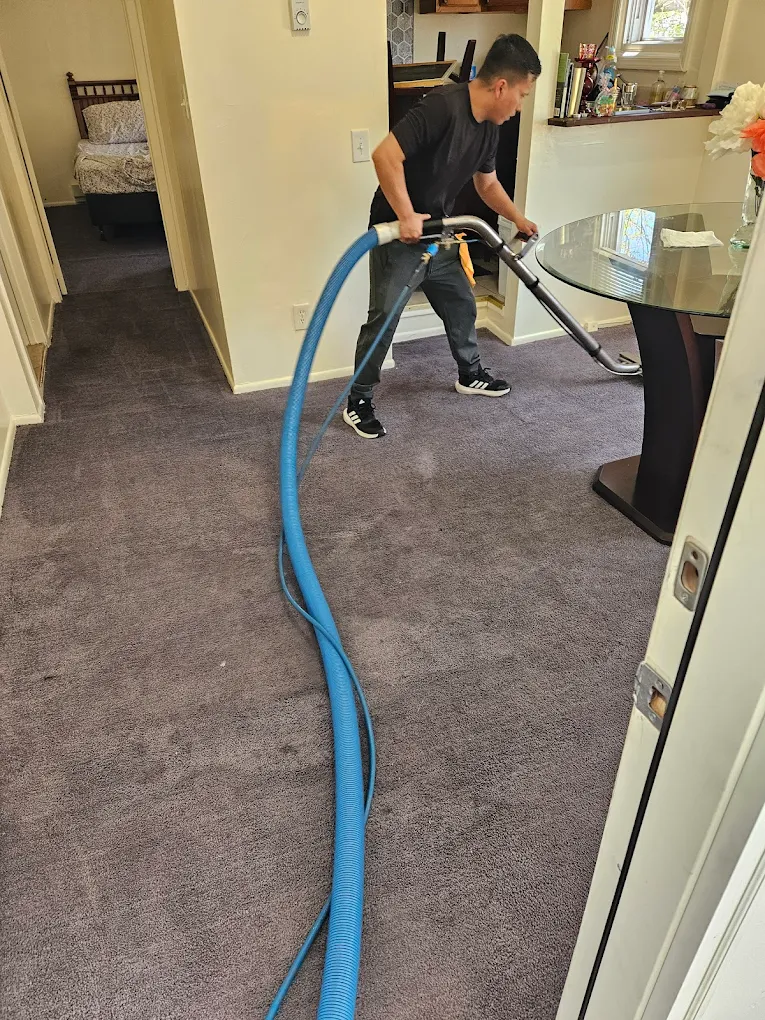
One visit for tile, carpet, rugs and furniture
Many homes have tile in the kitchen and bathrooms, carpet in the bedrooms and a sofa that needs attention. Booking it all at once saves you time and only one day of moving furniture. Our crew can do steam carpet cleaning upstairs, tile in the kitchen and upholstery cleaning in the living room in the same trip. For a full home refresh before guests or a sale, our residential carpet cleaning page explains how we plan bigger jobs.
If you have kids or pets and prefer gentle products, we use eco-friendly, non-toxic solutions on carpets and rugs. You can read why in our post on the benefits of eco-friendly carpet cleaning.
Where our crews work
We are based in Baldwin and our crews work across Nassau County and Suffolk County. That includes homes near us like Baldwin and Merrick, South Shore towns such as Massapequa, North Shore areas like Port Washington and Syosset, and Suffolk communities like Smithtown. Need help fast? Our same-day cleaning service covers tile and carpet when the schedule has room.
Ready to see your grout’s real color again?
Call Green Carpet Cleaning Long Island for a free quote. Tile and grout deep cleaning starts at $129, and new customers save $20 when they book online. Same-day service is available across Nassau and Suffolk County.
Tile and grout cleaning FAQ
How much does tile and grout cleaning cost on Long Island?
Our tile and grout deep cleaning starts at $129. The final price depends on the size of the area, the grout condition, the tile type and whether you add sealing. We confirm the price before we start, and new customers save $20 when they book online.
Can dark grout really look new again?
In most homes, yes. Gray grout is usually buildup of dirt, grease and soap film inside the pores, and hot-water extraction removes much of it. Grout that is stained deep by dye, rust or old bleach marks may improve without looking brand new, and we will tell you what to expect before we start.
Is it safe to use bleach on my grout?
Bleach can lighten colored grout unevenly and must never be mixed with ammonia or acids like vinegar, because that makes dangerous gases. For regular cleaning, a pH-neutral cleaner and a nylon brush are safer for your tile and your family.
Do you clean natural stone like marble and travertine?
Yes. Stone is softer than ceramic and reacts to acids, so we use a neutral cleaner and gentler handling. Tell us about any stone floors when you call so the right products come on the visit.
Should I seal my grout after cleaning?
Sealing is a good idea for most kitchen, bathroom and entry floors. A penetrating sealer helps grout resist spills and makes weekly cleaning easier. It must go on clean, dry grout, so it always comes after the deep clean.
Can you clean my tile and carpets on the same day?
Yes. Many customers book tile in the kitchen and carpet in other rooms on one visit. Carpet cleaning is $99 per room, one room of any size, and same-day appointments are available when the schedule allows. Call (516) 894-2930 for a free quote.
Green Carpet Cleaning Long Island
Local for 20+ years. Based in Baldwin, NY. Same-day service available.