Rug Pads and Hardwood Floors Under Area Rugs: A Long Island Guide
The floor under your rug takes more abuse than you think: sand, road salt, spills that soak through, and a pad that can help or hurt the wood. Here is how to protect hardwood under area rugs, which pads to trust, and what happens to the pad when your rug gets cleaned.
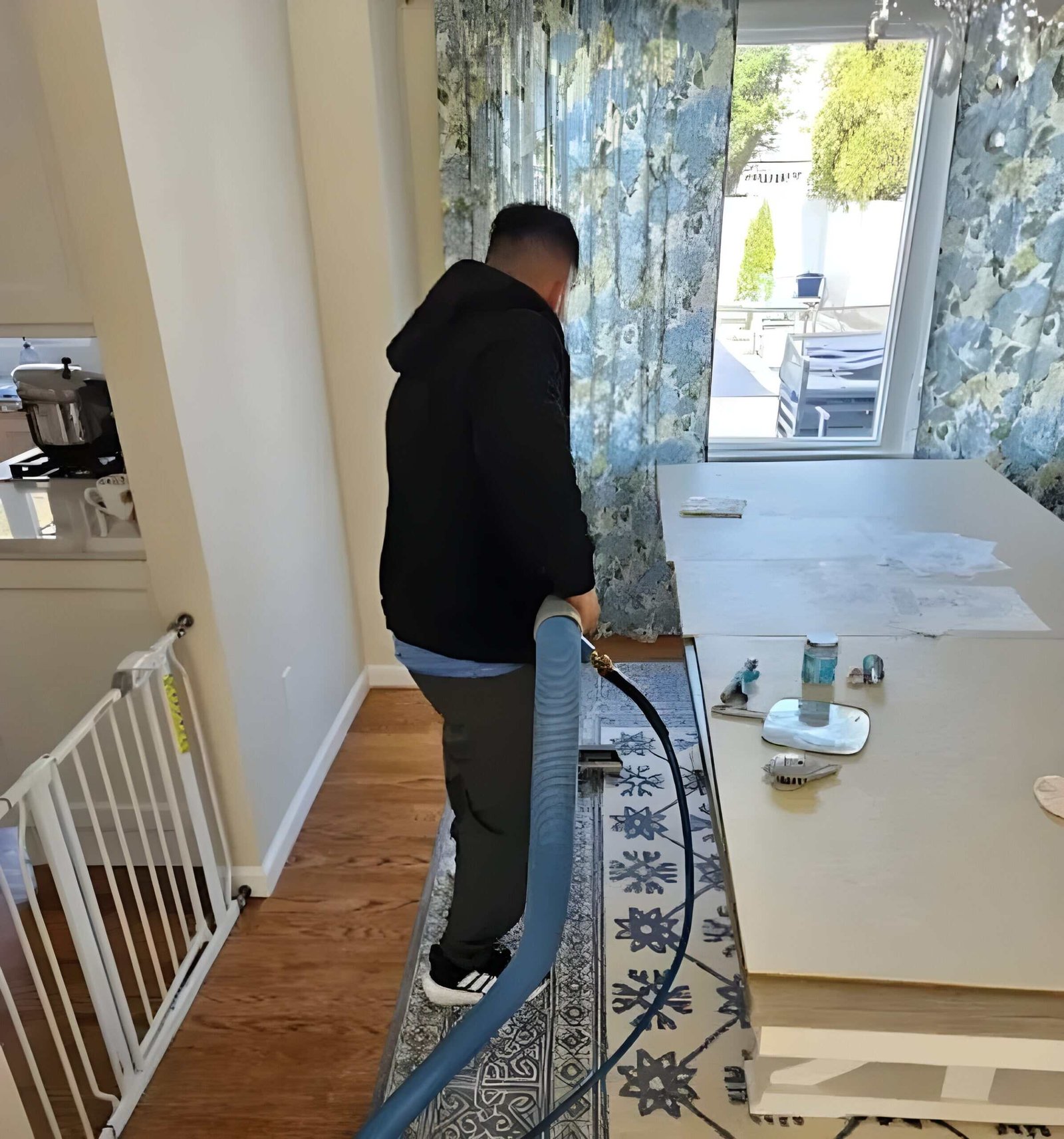
A good rug pad protects hardwood: it stops sliding, keeps grit off the finish and lets the floor breathe. Choose felt or felt with natural rubber, cut it about an inch smaller than the rug, and avoid cheap synthetic pads that can stick. Lift the rug after any big spill or pet accident so the wood can dry. Standard area rugs are $99 each to clean, and new customers save $20 when they book online.
Most people think about the rug and forget the floor under it. But when a family calls about area rug cleaning on Long Island, the first thing our crew does after rolling the rug back is look at the wood. Dull patches, gray rings or a pad stuck to the finish tell us how the rug has been living.
This guide is for homes with oak, maple or older strip hardwood under living room rugs, dining room rugs and hallway runners. We are a Baldwin-based team of carpet and rug cleaners serving all of Long Island, and we see the same floor problems from the South Shore to the North Shore.
Why the floor under the rug matters
A rug, its pad and the floor work as a team. The rug takes the foot traffic, and the pad sits in the middle as a cushion and a grip.
When the pad is wrong or worn out, problems build up quietly: grit wears the finish, moisture gets trapped and the pad breaks down. You only notice the day you move the furniture.
Many Long Island homes were built between the 1940s and the 1970s, from Levittown capes to North Shore colonials, and lots of them still have their original hardwood. Protecting that wood under your rugs is much cheaper than refinishing it.
Sand, road salt and grit: the hidden sandpaper
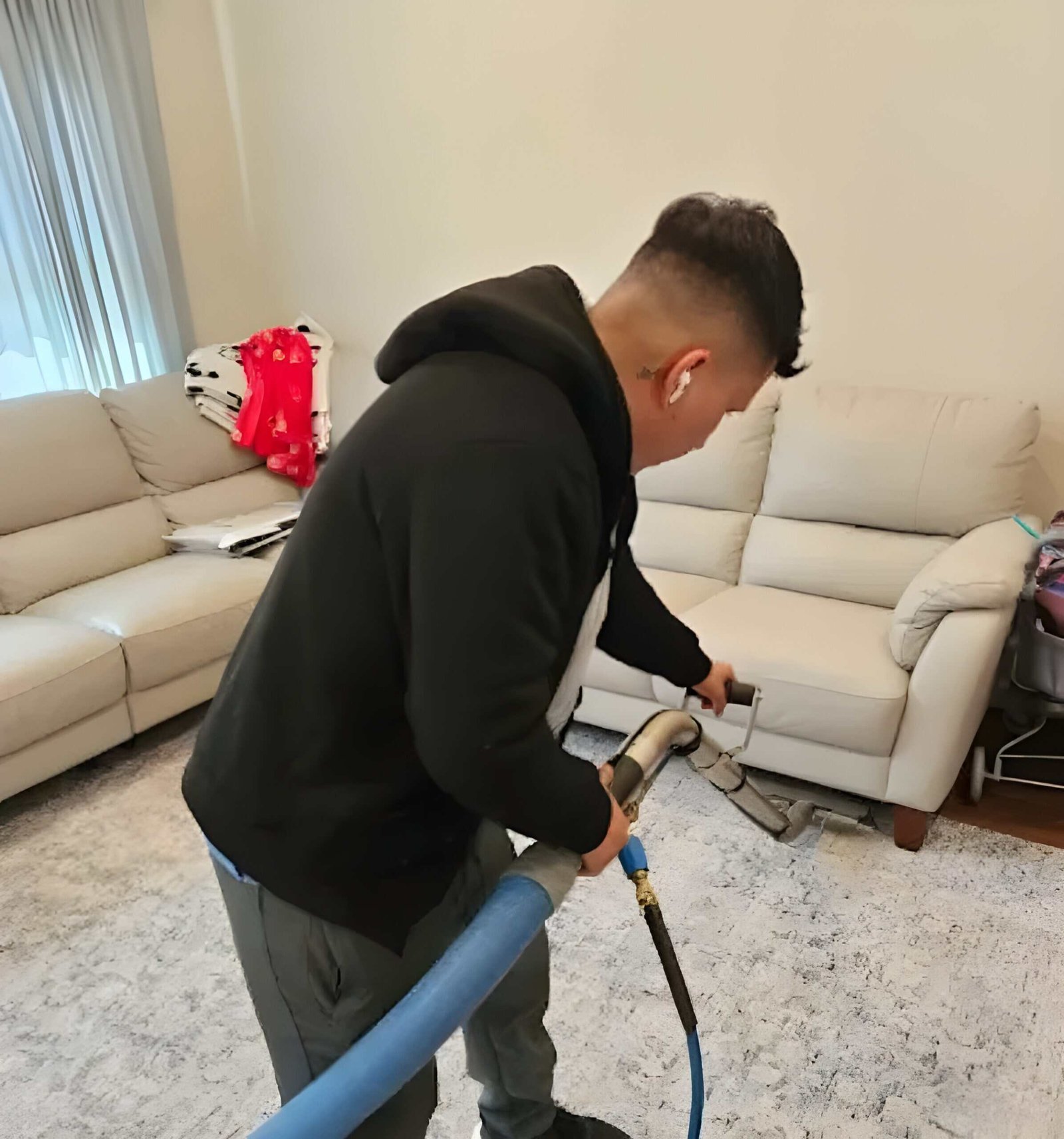
Dry soil is the main enemy of rugs and wood. Beach sand in summer, road salt and sidewalk grit in winter, and fine dust all year sift down through the pile to the pad and the floor.
Every step presses those sharp grains into the finish, and over time you get a hazy, scratched path.
Road salt adds a second problem. Slush from boots dries into a white film. In entry halls from Rockville Centre to Commack, the runner by the front door often shows it first.
The National Wood Flooring Association’s care sheet recommends breathable rugs at all doors to keep dirt and debris from being tracked in. A mat that traps moisture against the wood causes its own trouble.
Once a month, fold the rug back and vacuum the pad and the bare floor along the edges. Grit piles up there, and it takes five minutes.
Rug pad types and what they do to wood
Not every pad is safe for finished hardwood. Here are the kinds we find under rugs in Long Island homes:
| Pad type | Good for | Watch out for |
|---|---|---|
| Thick felt | Large rugs held in place by furniture, extra cushion | Can slide on its own under small rugs |
| Felt with natural rubber backing | Most living room and dining room rugs on hardwood | Cheaper versions may shed or crumble with age |
| Thin natural rubber grip | Runners and small rugs that need grip, low doors | Little cushion, less protection from grit |
| Plastic or synthetic rubber pads | Very low price | Can stick to the finish and break down into flakes that mark the floor |
| Rugs with a glued rubber back, no pad | Bath and kitchen mats | Traps moisture, can discolor wood under it |
A rug pad maker explains that synthetic rubber backings can stick to hardwood and break down into flakes that discolor it, while natural rubber grips without staining. If you are unsure what you have, check the back of the pad. A gummy or sticky feel, a strong plastic smell, or crumbs of pad left on the floor are signs it is time for a new one. Our guide on hand-knotted vs machine-made rugs also helps, because a heavy handmade rug and a light machine-made rug need different pads.
Sun shadows and color lines on the wood
Wood floors in a bright room slowly change color. Under a rug that never moves, the wood stays shaded while the border keeps getting light.
The result can be a clear outline of the rug on the floor. It is not dirt, and cleaning will not fix it.
The simple fix is rotation: turn the rug every few months, and pull the shades on the brightest afternoons.
Spills, pet accidents and moisture under the rug
A spill on a rug does not stay on the rug. It goes through the pile, into the pad and onto the wood, and a felt pad holds it like a sponge.
Pet urine is the worst case: it can stain the wood dark and turn a pad sour. After an accident, blot it, then fold the rug back and check the pad and floor right away. Our pet stain removal uses enzyme pre-treatment for the rug, and a soaked pad usually needs to be replaced.
Leaving the rug down
A big spill under a heavy rug can sit on the wood for days and leave a dark ring.
Plastic pads
Cheap synthetic pads can stick to the finish and leave a pattern on the floor.
Soaking at home
Rental machines and buckets push water through the rug and into the pad and wood.
Pad bigger than the rug
An edge that sticks out curls, collects dirt and becomes a trip hazard.
Finished basements, concrete and humid air
Many Long Island basements have engineered wood, vinyl plank or tile over concrete, with area rugs on top. A slab can feel cool and damp, especially after heavy rain, and a thick pad can hold that dampness against the floor.
The same NWFA care sheet suggests keeping wood floors at about 30 to 50 percent humidity year-round. A dehumidifier in the basement and a few minutes of airflow under the rug now and then go a long way. If a basement rug smells musty, lift a corner and check the pad first. Our post on caring for vinyl, stone and tile floors covers the hard floors themselves, and our floor cleaning service can take care of them.
Sizing and placing the pad
The pad should be a little smaller than the rug, so the rug edges lie down flat over it. A simple rule:
- Cut the pad about one inch shorter than the rug on every side.
- Use one pad per rug. Do not overlap two pads to cover a large rug.
- For runners on stairs or in halls, pick a thin grip pad so doors still open.
- Put felt protectors under furniture legs that stand on the rug and the floor at the same time.
What happens to the pad during a rug cleaning

When our crew comes for a rug, the pad gets attention too. Many synthetic and sturdy wool rugs can be cleaned right in your home. Here is how the pad and floor fit into that visit:
- Check the rug, pad and floorWe look at the fiber, test a hidden spot, check the pad and the wood under it, and confirm the price before any work starts.
- Dry soil removalLoose grit comes out of the pile before any water goes in.
- Pre-treatment and agitationSpots, traffic paths and pet areas get a pre-treatment worked gently into the fibers.
- Hot water extractionThe rug is cleaned with a truck-mounted or portable extractor and a clean-water rinse that pulls the soil back out.
- Protect the floor while it driesThe wood is kept dry, air movers speed up drying, and the rug goes back on its pad only when it is dry.
Fine handmade, silk and antique rugs get a free quote and gentler handling. Read what happens to your area rug, step by step, or see our Oriental rug cleaning and wool rug cleaning pages.
Book the rug cleaning before you buy a new pad. A clean, flat rug is easier to measure, and you will see if the old pad is still good.
When to replace a rug pad
Pads do not last forever. Replace yours if you see any of these signs:
- It crumbles, flakes or leaves bits on the floor when you lift the rug.
- It feels sticky, or it has stuck to the wood in spots.
- It still smells after a pet accident or a big spill.
- The rug slides or the corners curl even with the pad in place.
Prices and areas we serve
Standard area rugs are $99 each, and wall-to-wall carpet is $99 per room. Oversized, handmade and specialty rugs get a free quote, and the price is always confirmed before we start. New customers save $20 when they book online.
Our crews work across Nassau County and Suffolk County, including rug cleaning in Rockville Centre, Port Washington, Huntington and Commack. You can also see all our rug cleaning services.
If a sofa stands on the same rug, our upholstery cleaners in Freeport and across Long Island can clean it on the same visit.
Get your rugs clean and your floors protected
Call us or book online. We check the rug, pad and floor, confirm the price before we start, and new customers save $20 when they book online.
Rug pads and hardwood floors FAQ
Do I really need a rug pad on a hardwood floor?
Yes, for most rugs. A pad stops sliding, adds cushion, and keeps the back of the rug from rubbing grit into the finish.
Can a rug pad damage hardwood?
Cheap plastic or synthetic rubber pads can stick to the finish or leave marks as they break down. Felt or felt with natural rubber is a safer choice for finished wood floors.
How big should the rug pad be?
About one inch smaller than the rug on every side, so the rug edges lie flat and the pad does not show.
Can you clean my area rug without getting the wood wet?
Yes. We protect the floor, use a clean-water rinse and air movers for faster drying, and put the rug back on its pad only when it is dry.
How much does area rug cleaning cost?
Standard area rugs are $99 each. Oversized, handmade and specialty rugs get a free quote, confirmed before work starts. New customers save $20 when they book online.
Green Carpet Cleaning Long Island
Local for 20+ years. Based in Baldwin, NY. Same-day service available.