Recliner Chair Cleaning on Long Island: Headrests, Arms and Footrests
The recliner is the chair everyone fights over. Dad watches the game in it, the dog naps in it, and Grandma will not sit anywhere else. That is also why it is the first piece of furniture in the room to turn dark and shiny. Here is where the dirt hides, what you can safely do at home, and how a recliner is cleaned right where it stands.
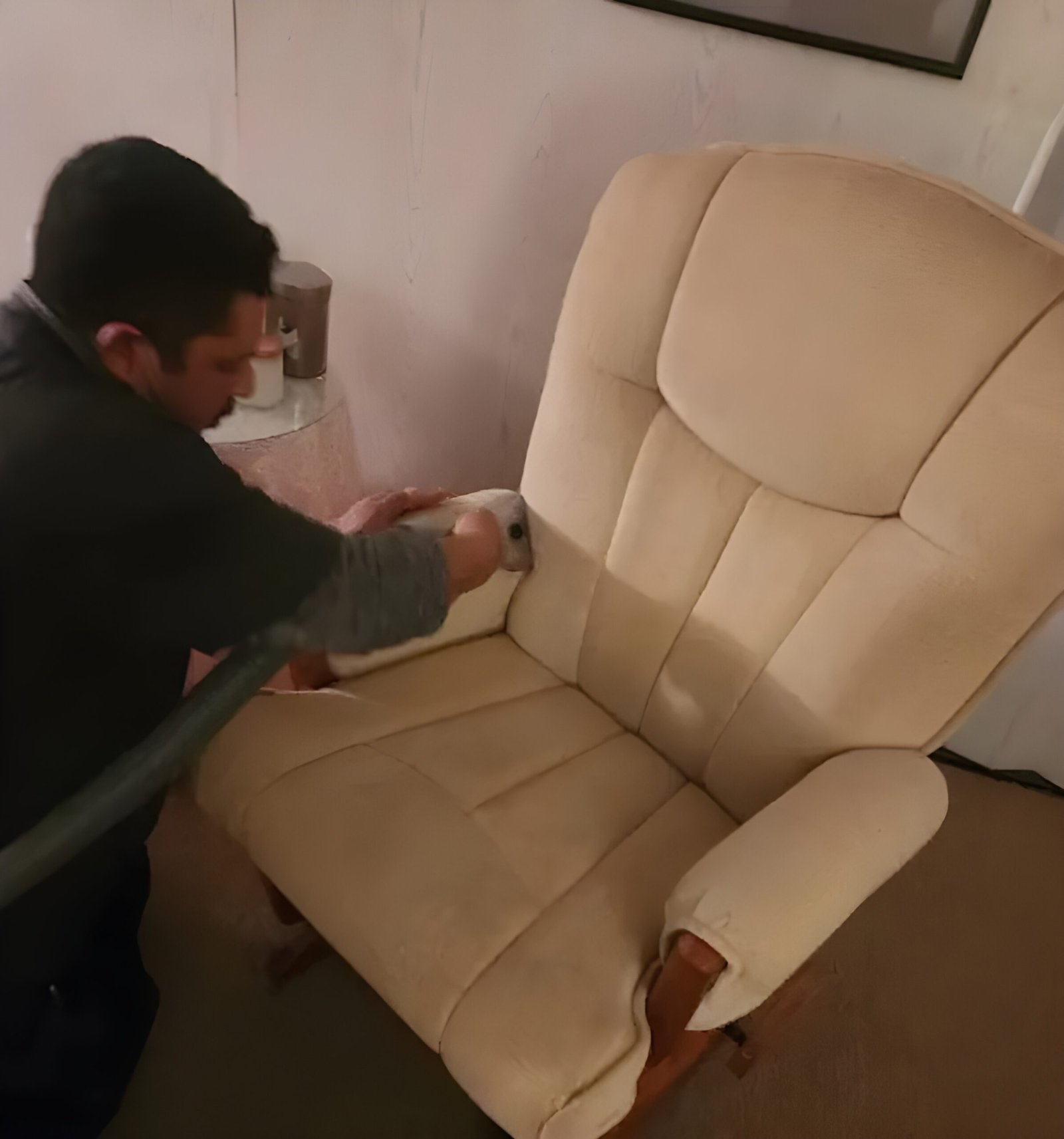
A fabric recliner gets dirty first on the headrest, the arm fronts, the edge of the seat and the footrest, because that is where hair, skin oil, hands and feet touch it every day. At home, vacuum it well (including inside the gaps), blot fresh spills and check the cleaning tag. Do not soak it or use a carpet machine on it. A professional cleaning loosens the oil with a pre-treatment, rinses the fabric with a low-moisture upholstery tool and pulls the water back out, so most fabric recliners are dry in a few hours.
Recliners are one of the most common pieces we see in our upholstery cleaning Long Island visits. They sit in family rooms, finished basements and bedrooms, and they get more hours of use than almost any other seat in the house.
As carpet and upholstery cleaners on Long Island based in Baldwin, our crews clean recliners in Nassau and Suffolk homes. Here is what we look for and what you can do yourself.
Why the recliner gets dirty before the sofa
People move around on a sofa. A recliner usually belongs to one person, who sits in the exact same position for hours.
The head, hands and legs rest on the same few spots every evening. Over months, hair oil, skin oil and lotion build up there, and that oil grabs dust from the air. The result is the dark, slightly shiny patch you see on so many headrests.
The four places that need the most attention
We check these areas first. They decide how much pre-treatment the chair needs.
The headrest
Hair products, skin oil and sweat soak in here. It is usually the darkest part of the chair and needs a pre-treatment that breaks down oil.
The arm fronts
Hands rest and grip here all day. Look for a gray or shiny patch where the fingers sit, plus food and drink spots.
The seat edge
The front edge of the seat rubs against the back of the legs and catches spills from a plate or a cup on the lap.
The footrest
Socks, bare feet and pet paws leave body oil and dirt on the leg rest, especially on light fabric.
On a reclining sofa or loveseat, the same four spots apply to each seat. Our guide to sectional sofa cleaning covers large reclining sectionals in more detail.
Types of recliners and what each one means for cleaning
How the chair moves changes how we clean it.
| Recliner type | What to know | How we handle it |
|---|---|---|
| Push-back or lever recliner | Simple mechanism, often a gap between seat and arms | Vacuum the gaps, then clean in the open and closed positions |
| Rocker or glider recliner | Moves while you work on it; some have wood arms or a wood base | Keep the chair steady and keep moisture off the wood parts |
| Power recliner | Motor, cords and a switch or buttons on the side | Unplugged before cleaning; low moisture near the buttons and seams |
| Lift chair | Heavy motor that tilts the whole chair forward | Unplugged and lowered; we clean around it and do not tip it over |
| Reclining sofa or loveseat | Two or three recliners in one frame | Each seat is treated like its own chair |
For power recliners and lift chairs, tell us on the phone and leave the chair upright, so we can unplug it while we work.
Check the cleaning tag first
Most recliners have a tag under the seat or on the back. It often shows a cleaning code: W, S, W/S or X. That letter tells you what is safe to put on the fabric at home.
We explain each letter in our post on sofa cleaning codes W, S, W/S and X. If there is no tag, do not guess with a home product.
Many family-room recliners are covered in microfiber or a polyester blend. Microfiber can leave rings and water marks if it is wet and dried the wrong way, which is why we handle it with microfiber upholstery cleaning methods and very little water.
What you can do at home between cleanings

A few small habits keep a recliner looking better for much longer:
- Vacuum weekly with the crevice tool: run it down the gaps between the seat and the arms, and around the footrest hinge.
- Open the chair and look inside: unplug power recliners first, then pick out crumbs and pet hair.
- Use a washable cover on the headrest: a small cloth or towel that you wash every week takes the hair oil instead of the fabric.
- Blot spills right away: press with a dry white towel. Do not rub, because rubbing spreads the spill and roughs up the fabric.
Wash your hands before settling in for a movie with popcorn or chips. The grease from snack food on your fingers ends up on the arm fronts, and it is one of the most common dark patches we treat.
What not to do to a recliner
Much of the damage on recliners comes from a cleaning attempt:
- Do not soak it. Too much water goes through the fabric into the foam and can leave brown rings when it dries.
- Do not use a carpet machine. Carpet machines put down far more water than upholstery fabric can handle.
- Do not scrub with a stiff brush. It can fuzz microfiber and chenille and leave a rough, light patch.
- Do not spray near the buttons. On power recliners, keep liquids away from the switch, the cords and the motor area.
If a home product made a spot bigger, our stain removal service can often treat it. Tell us what was used.
How we clean a recliner in your home
We clean recliners right where they stand, with no pickup.
- Look and test. We check the tag, the fabric and the worst spots, and test the pre-treatment in a hidden area. You get the price before we start.
- Unplug and open. Power recliners and lift chairs are unplugged. We open the chair to reach the gaps and the fabric folds.
- Dry soil removal. We vacuum the seat, the arms, the gaps and the footrest, so loose dirt and hair do not turn into mud.
- Pre-treatment and agitation. The headrest, arm fronts, seat edge and footrest get a pre-treatment for oil and body soil, worked in gently.
- Low-moisture rinse and extraction. A small upholstery tool rinses the fabric and pulls the water back out right away.
- Grooming and drying. We brush the fabric in one direction and leave the chair open or upright, whichever dries better.
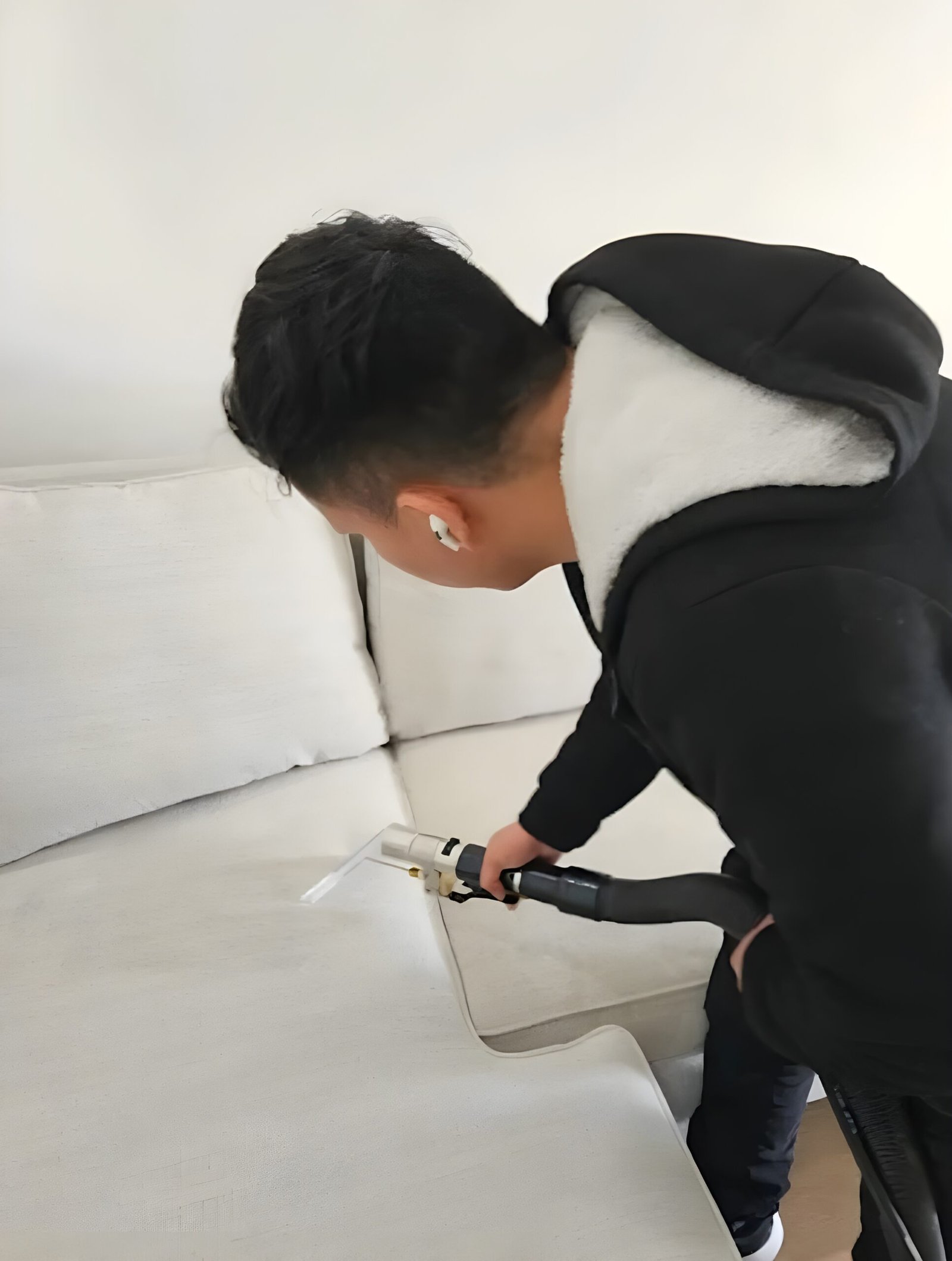
The same small tool and the same steps are used in our fabric upholstery cleaning and sofa and couch cleaning. Many customers have the recliner and the sofa in the same room done on one visit.
Pet spots on a recliner
If a cat or dog has had an accident on the chair, tell us before the visit. Urine can go through the fabric into the foam, and that needs a different treatment from normal body soil. Our pet stain removal focuses on the spot itself, and we will tell you honestly how much we expect to come out before we start.
Drying: when can you sit in it again?
Because we use low moisture, most fabric recliners are dry to the touch in a few hours. To help:
- Keep the heat running and a ceiling fan on if you have one.
- Leave the chair open or upright the way we leave it, and do not recline it back and forth until it is dry.
- Wait until the fabric is dry before plugging a power recliner back in.
Hosting this week? Book the recliner and sofa cleaning a day or two before the guests come, not the morning of. That gives the fabric the full night to dry, and everyone gets a fresh seat.
Leather recliners
Leather recliners have the same problem spots but need a different method: a leather cleaner and a conditioner, not water-based upholstery cleaning.
If your recliner is leather, see our leather furniture cleaning page, and our earlier post on leather furniture cracks, oils and care explains why heated Long Island homes dry leather out in winter.
What recliner cleaning costs
Every recliner gets a free quote. Tell us the type of chair, the fabric and any pet spots, and we confirm a clear price before any work starts, with no hidden fees.
Adding carpet in the same room? Carpet cleaning is $99 per room (one room, any size). Dining chairs and loose cushions can be added too with our seat cushion cleaning. New customers save $20 when they book online.
Where our crews clean recliners
We are based in Baldwin and work across Nassau County and Suffolk County. In Nassau, our crews do upholstery cleaning in East Meadow, Seaford and Plainview, where finished basements and family rooms with a recliner in front of the TV are very common.
In Suffolk, our crews work in Copiague, Holbrook and Coram. Tell us your town on the call, and we will let you know the first open time.
Give the favorite chair a fresh start
Call us or book online. Tell us what kind of recliner you have, the fabric and the spots that bother you, and we will give you a free quote and a time that works.
Recliner cleaning FAQ
Can a recliner be cleaned without taking it out of the house?
Yes. We clean recliners right where they stand in your home. There is no pickup, and the chair stays in the room the whole time.
Is it safe to clean a power recliner or a lift chair?
Yes, with care. We unplug the chair, keep liquids away from the buttons, cords and motor area, and use low moisture on the fabric. Please wait until the fabric is dry before plugging it back in.
Will the dark spot on the headrest come out?
In most cases a headrest looks much lighter after a pre-treatment for oil and a rinse. Very old buildup or fabric that is worn thin may not look new again, and we tell you what to expect before we start.
How long does a recliner take to dry?
Most fabric recliners are dry to the touch in a few hours because we use low moisture on upholstery. Thick cushions and damp days take longer. Heat and a fan help.
How much does it cost to clean a recliner?
Every recliner gets a free quote, because size, fabric and spots are different. You get a clear price before any work starts, and new customers save $20 when they book online.
Green Carpet Cleaning Long Island
Local for 20+ years. Based in Baldwin, NY. Same-day service available.